February 14, 2025
Debunking 'rabies is a fortune cookie' Pt.4
Analyzing James True's article on the rabies 'virus' IV
James True’s podcast was my first exposure to the dancing plague of 1618—a historical event demonstrating that pandemics can occur without the presence of a virus. While True typically acknowledges psychosomatic diseases, he paradoxically ignores the psychosomatic aspects of rabies.
The “gain of function” narrative serves as a sophisticated misdirection. While appearing to reveal hidden truths about the health freedom movement, it actually leads them into another false position. This narrative perpetuates fear, provides justification for various health measures, encourages vaccine development, leads to unnecessary animal culling, and distracts from addressing both the fundamental causes of illness and our true understanding of human body function.
Thanks for reading Harsh’s Substack! Subscribe for free to receive new posts and support my work.
Proponents of germ theory take an overly narrow approach by focusing solely on germs while disregarding critical factors such as environment, toxins, trauma, emotional state, and bio-resonance.
James True appears to have conducted insufficient research, uncritically adopting Andy Kaufman’s “virus is not real” stance without independent verification. In his book “Best Apocalypse Ever,” True quotes from what he claims is Dawn Lester and David Parker’s “The Real Science of Germs”:
“You can have a specific germ in your body and not be sick. There are 380 trillion viruses in the human body. Germ theory will declare war on every one of them.”
However, two issues suggest True never actually read Lester and Parker’s 840-page book (actually titled “What Really Makes You Ill”):
1. He misidentifies the book’s title, which appears to be more than a simple typo.
2. His statements about rabies in wildlife and raccoons contradict the book’s detailed examination of the topic.
We now know that rabies-like symptoms can have multiple causes:
- Poisoning can cause foaming at the mouth
- Nervous system disorders like epilepsy
- Similar diseases including distemper, meningitis, and encephalitis
- Poor treatment and malnutrition increase susceptibility to these conditions
- In humans, intoxication or extreme inebriation can mimic rabies symptoms
Had James True thoroughly read Lester and Parker’s comprehensive analysis of germ theory and rabies, he likely wouldn’t have written “Rabies is a Fortune Cookie.” While I was initially strongly attracted to True’s work, this has taught me an important lesson.
All education is self-education. A teacher is only a guide. What you receive is like the outlines in a child’s coloring book. You must fill in the colors yourself.
—LOUIS L’AMOUR
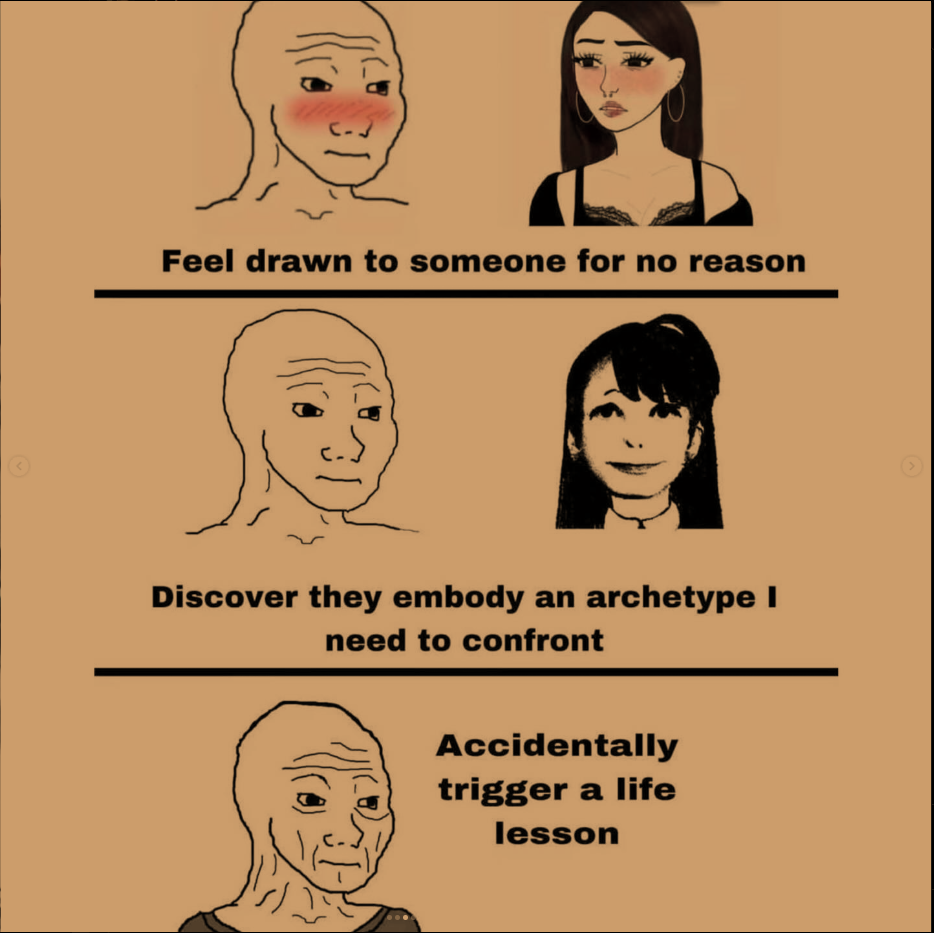
If I had to sum up this interaction with JT in one picture.
Germ theory is a deadly fallacy
The theory has driven:
- Animal testing
- Use of animal and foetal(human parts) in vaccines
- Mass culling of herds diagnosed by a disease with nothing but a PCR test.
- Feeding pets commercial rather than natural, raw food
- Widespread lockdowns?
- Human rights violations
- Mass drug and vaccination deployment
If germ theory is correct and continues to be widely accepted, we face a future of endless pandemics, animal cullings, dysgenics, and mass vaccination campaigns. However, if it’s incorrect, there can be no justification for the oppressive measures that caused global psychological and economic hardship.
The fear of contagion propagated by germ theory has driven self-destructive behaviors, evidenced by increased suicides and iatrogenic deaths during COVID-19. The collapse of germ theory would end:
1. Vaccines
2. ‘Anti-viral’ drugs
3. Antibiotics
4. The entire medico-pharma-nutraceutical industry
5. Numerous public health institutions
Like cosmology, our beliefs about the microcosm shape our reality. If someone believes dangerous viruses exist in every dog, squirrel, and raccoon’s saliva, and believes they’ve been bitten, these beliefs alone can manifest symptoms. Accepting the rabies virus because authority figures endorse it leads to accepting all viruses and the ever-looming threat of a pandemic cast on humanity forever.
This cycle will continue until individuals investigate truth independently. Books like Daniel Roytas’ “Can you Catch a Cold?” and Mark Gober’s “An End to Upside Down Medicine” now make this information accessible to the general public, unlike before.
James True criticizes others (like Mark Passio and other ‘objectivists’) for claiming truth is objective, yet demonstrates the same objectivism regarding the microcosm. His ‘neutral’ stance helps no one and shows a lack of conviction—ironic coming from someone who said “Sit deep in your pelvis.”
A Message to Readers About Virus Theory and Scientific Consistency
A ‘virus’(‘poison’ in Latin) is a particle that triggered global emotional and physical hardship through authoritarian government measures. It has never been properly isolated and studied.
If I had to use JT’s terminology, this means the virus has never been:
-
Studied independently(independent = stand-alone)
-
Evaluated while accounting for placebo/nocebo effects
A Critical Contradiction: JT claims rabies is simultaneously:
-
A mind virus/psychosomatic condition
-
A contagious wild ‘virus’
Moreover, JT’s definition of ‘psychosomatic’ differs from fear, as evidenced by his convoluted reasoning in these statements in the comments section:
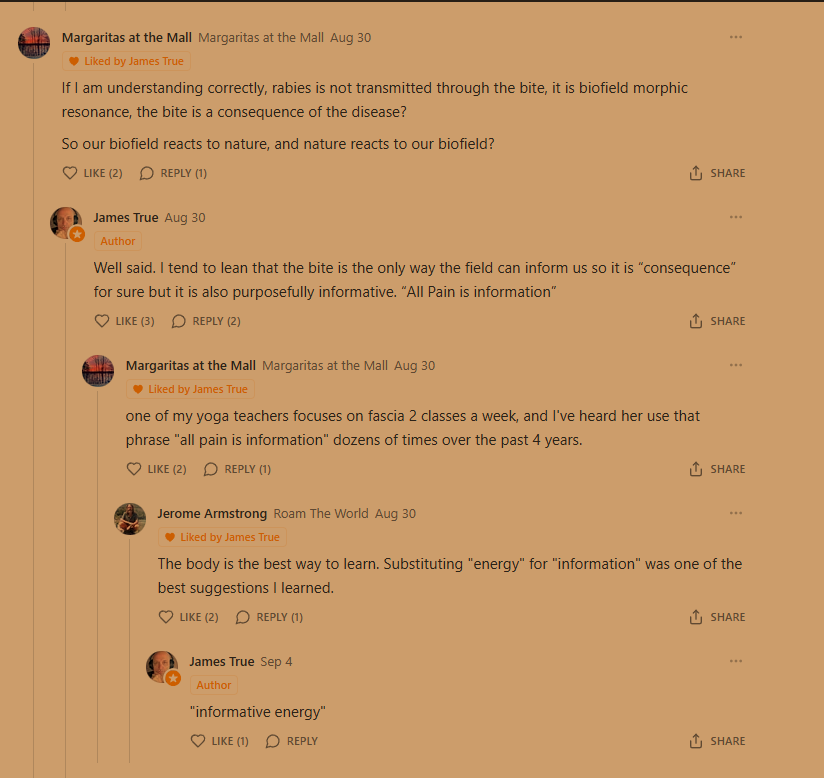
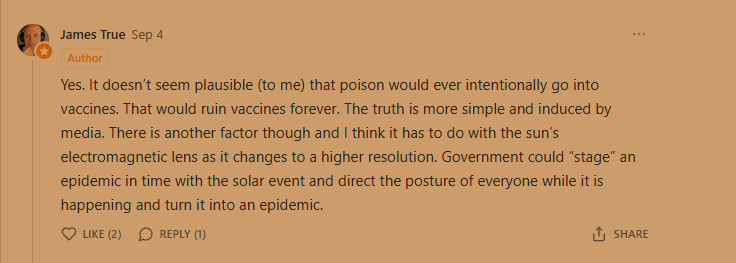
It gets problematic - according to JT, vaccines don’t have poisonous stuff in them. While this may be true with covid vaccines which had a lot of ‘blanks’, this is definitely not true with the other vaccines.
While True’s theories on pain’s importance are accurate, focusing on bites and scratches represents only a tiny fraction of human pain—most pain is emotional and mental, making rabies a reductionist example. Rabies manifests in two forms: dumb and furious. In dumb rabies, animals show no aggression or biting behavior. Understanding dog behavior reveals that nipping often serves as attention-seeking behavior. Dogs bite territorial intruders—this was their original purpose as security systems, using smell to identify threats in ways modern CCTV cameras cannot replicate. Should this natural behavior warrant vaccinations with over 65 listed adverse reactions?
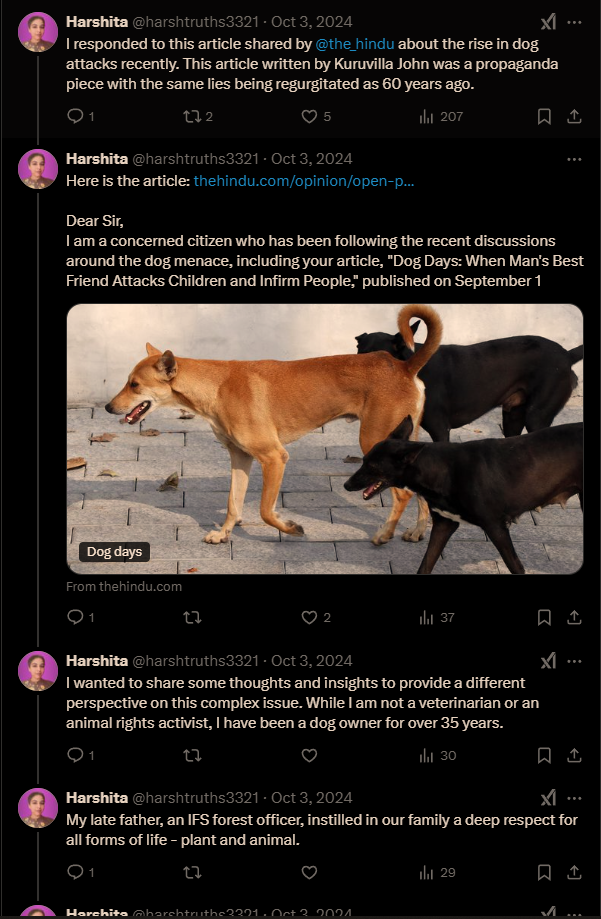
Genuine cases of aggression happen when animals are mass-vaccinated. A striking example is Kerala in India. It’s an Indian state with the highest rates of rabies vaccination and the highest cases of dog bites and dog-mauling reports.

I responded to this opinion piece on X, but there has been no response from either The Hindu or Kuruvilla John:
Why do people still believe the germ theory?
Many people now equate high veterinary costs with good pet care, leading them to purchase expensive vet-approved kibble and imported canned food. While some owners lovingly prepare home-cooked meals, their pets’ ancestors likely consumed mostly raw food.
As pet ownership reaches record levels, many aren’t prepared for true pet responsibility. Being truly responsible means serving as your own doctor—since no one knows your body better than you—and as your pet’s veterinarian, since you understand your pet best.
With animals, we only need to follow one simple rule: feed them as close to their natural diet as possible. And don’t inject any toxins.
Consider this: your pet’s ancestors never ate from cans or packets! Those who accept the rabies ‘virus’ theory often also believe that commercial dog food contains proper nutrition and that veterinarians know best. While veterinarians possess more knowledge than typical pet owners, they often struggle with complex issues like chronic health conditions, diabetes, cancers, and autoimmune disorders.
This mindset explains why many continue feeding commercial “dog food.” The separation between “human food” and “dog food” is artificial—food is simply food. Choosing raw feeding requires courage because society has conditioned us to fear germs.
Germ theory claims diseases result solely from aggressive microorganism invasion, with specific germs causing specific diseases and capable of surviving outside the body. This theory absolves us of responsibility for illness caused by poor lifestyle choices, diet, and environment, shifting blame to “germs” and healthcare responsibility to medical professionals who claim they can eliminate these organisms.
Recent discoveries show humans have more microbial than human cells—a 10:1 ratio. Yet bacteria have been demonized, ignoring the organism’s terrain. Pasteur, a wealthy and influential chemist and physicist with limited biological knowledge, promoted germ theory, which gained strength with the electron microscope’s invention. Before this, medicine was heavily influenced by religion and superstition.
Historically, Dr. M. A. Plenciz first published the “Germ Theory of Infectious Disease” in 1762, though Pasteur claimed credit in 1860. Sources like R. B. Pearson’s “Pasteur: Plagiarist, Impostor” and Douglas E. Hume’s “Bechamp or Pasteur?” document this. By the late 1880s, Pasteur admitted his error when his co-worker Dr. Duclaux noted that microbial species could transform—a phenomenon called Pleomorphism. Nevertheless, medicine embraced germ theory, sidelining Bechamp’s terrain theory.
Believing in germs requires less energy than taking responsibility for pet health issues like tumors, skin conditions, or behavioral problems. For example, “parvovirus” in dogs results from feeding commercial puppy food to newly weaned puppies, often coinciding with their first vaccinations in new homes.
The vaccine schedule for dogs recommended by the American Animal Hospital Association (AAHA):
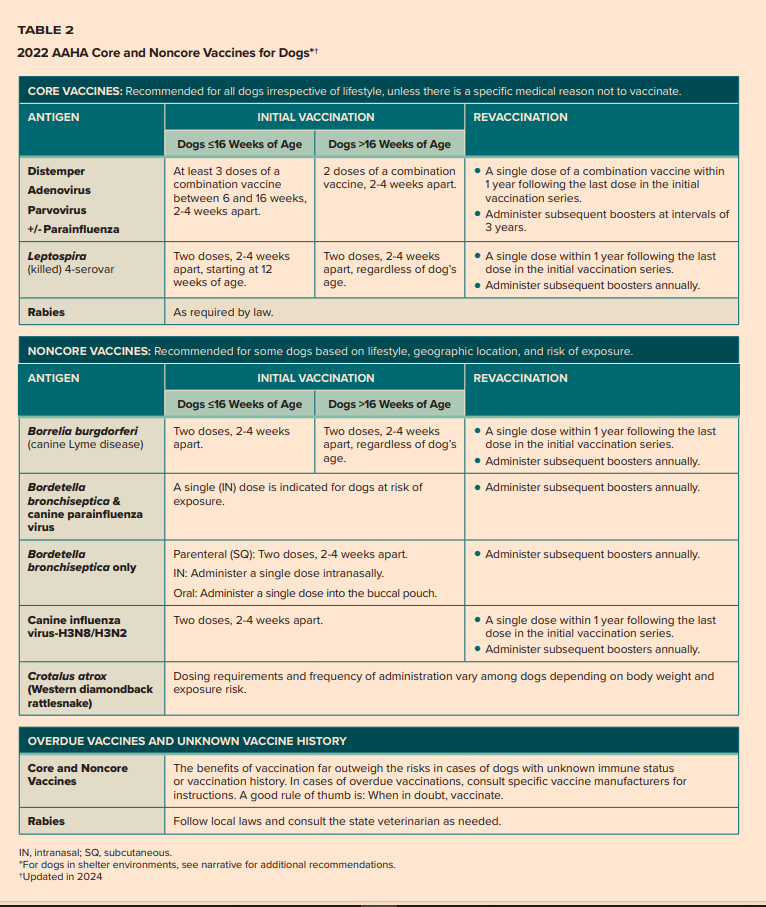
Pet owners often seek guidance from authority figures in white lab coats. While veterinarians excel at handling emergencies, such as providing stitches after accidents or fixing broken bones, their usefulness has limits. Most veterinarians and veterinary technicians emerge from the same Rockefeller-based medical education system that produces human doctors.
If rabies is indeed as much of a threat as JT and the CDC claim, then government and municipal agencies are justified in:
-
Implementing mass animal vaccination programs
-
Recommending shots for even minor animal contact (licks or scratches)
Impact on Pets:
-
Required vaccinations every 1-3 years
-
Multiple vaccines administered simultaneously (multi or pentavalent shots)
-
Single-disease vaccines are no longer available
Unacknowledged Consequences:
-
Vaccinated animals can develop a mild form of rabies (termed ‘miasm’ by homeopaths)
-
JT overlooks that some ‘rabies’ cases he witnessed might result from oral vaccines air-dropped in wildlife areas across the USA and Canada
Human Impact:
-
Prophylactic rabies vaccines can cause serious illness and death
-
Recent example: Three deaths in India following rabies shots after suspected bites/scratches
Links to news articles of recent cases of death following rabies vaccinations in India:
Kolhapur city woman dies of rabies despite completing vaccine course
77-yr-old dies after receiving anti-rabies injection
In Maharashtra, girl dies of rabies even after vaccine, antibody therapy
People in urban and semi-urban areas of India died not from dog bites, but from injections given after the bites. Despite the powerful placebo effect that injections typically have, these shots failed to counteract the supposed rabies virus in their blood from animal saliva or scratches (raising the question: do animal nails now carry rabies too?). These deaths represent only a few cases among many adverse reactions.
A pro-vaccine veterinarian, while recommending a “minimal” vaccine schedule, notes: “Rabies vaccines are the most common group of biological products identified in adverse event reports received by the USDA’s Center for Veterinary Biologics (CVB).” In simpler terms, the USDA’s Center for Veterinary Biologics frequently receives reports of adverse reactions to rabies vaccines.
The emergence of data on animal vaccine adverse effects paralleled similar findings in childhood vaccines. Catherine Diodati addressed the outdated science behind animal vaccines in her book as early as 1959.
Addressing JT’s Zetetic Stance:
While JT claims to only believe his own wildlife rehabilitation experience, my extensive personal experience includes:
-
30+ years of dog ownership
-
12+ years of cat ownership
-
My observations of how vaccines have impacted my past/passed pets:
-
Cancer development
-
Autoimmune diseases
-
Common end-of-life euthanasia
-
-
Witnessed rabies miasm, and aggression in street dogs following mass vaccination campaigns in Bangalore
Significant Observations:
-
No rabies cases were encountered in 38 years of living in urban and rural southern India
-
Most veterinarians struggle to cite firsthand experience with genuine rabies cases
Comprehensive Research: I’ve authored:
-
A comprehensive book on animal vaccines, focusing on:
-
Rabies disease and vaccination
-
Clinical efficacy data
-
Short and long-term side effects
-
Alternatives to the vaccines
-
-
A book on species-appropriate cat nutrition for longevity without veterinary intervention or need for euthanasia.
-
I authored two articles on substack: Part 1 explores the potential psychosomatic nature of rabies, while Part 2 dives into the fraud of Louis Pasteur. A third article exposing the fraud of rabies testing is in the works.
More resources:
If you are interested in the full story about rabies in one article, Aldhissla has posted about rabies.
Thanks for reading Harsh’s Substack! Subscribe for free to receive new posts and support my work.
Originally published on Substack — view source