November 22, 2025
Energy, Attention, Placebo & the Biology of Belief
How your beliefs affect you in every day life.
“Energy flows where attention goes.”
This principle isn’t poetic — it’s biological, psychological, and deeply somatic.
In daily life, especially around food and the body, people unknowingly direct their attention in ways that harm rather than heal. Eating itself is a community ritual: families eat together, colleagues gather in common spaces, friends share desserts and conversations. And within these shared environments, people often express shame or guilt out loud:
“Ugh, I shouldn’t eat this.”
“This will make me fat.”
“My knee is so bad, I can’t do anything.”
“I haven’t exercised in weeks.”
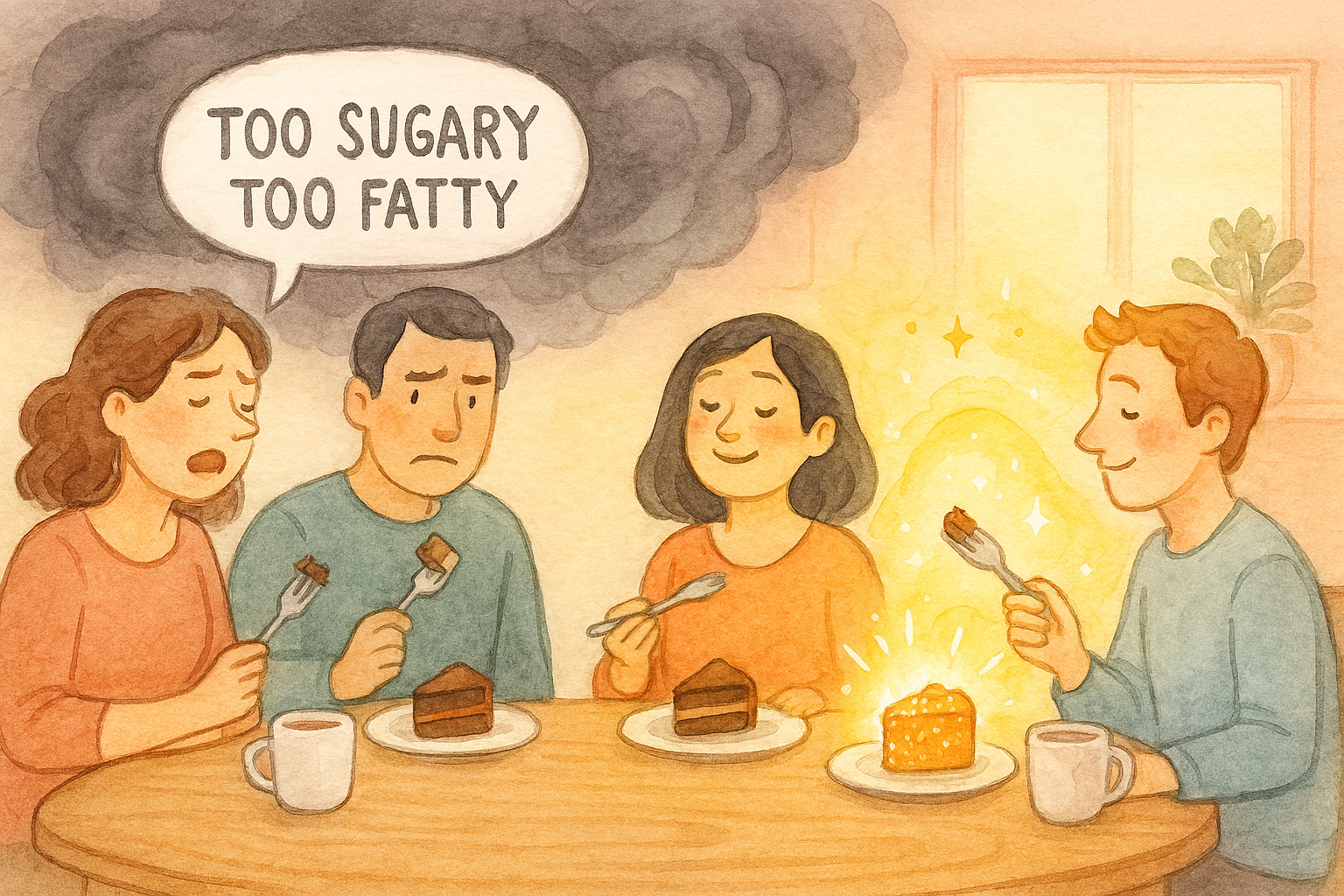
These statements may feel casual, but they shape inner physiology and the collective emotional field. When someone shames a piece of cheesecake or a Pop-Tart, the entire energetic tone of the meal shifts from gratitude to guilt. Instead of enjoying an occasional treat, people end up eating in a state of tension, resentment, and self-criticism — which has a real biological impact. Food-shaming doesn’t reduce calories. It doesn’t make the food healthier. In fact, consuming anything in a state of guilt, fear, or self-devaluation can worsen how the body metabolizes it.
This is where the placebo effect, and its deeper implications, become relevant.
The Biology of Belief
The placebo effect is one of the most thoroughly studied phenomena in medical science: an inert substance or fake intervention produces real, measurable physiological change simply because the person believes it will help. And yet, most of us rarely leverage this power intentionally.
Consider these examples:
1. The Milkshake Study
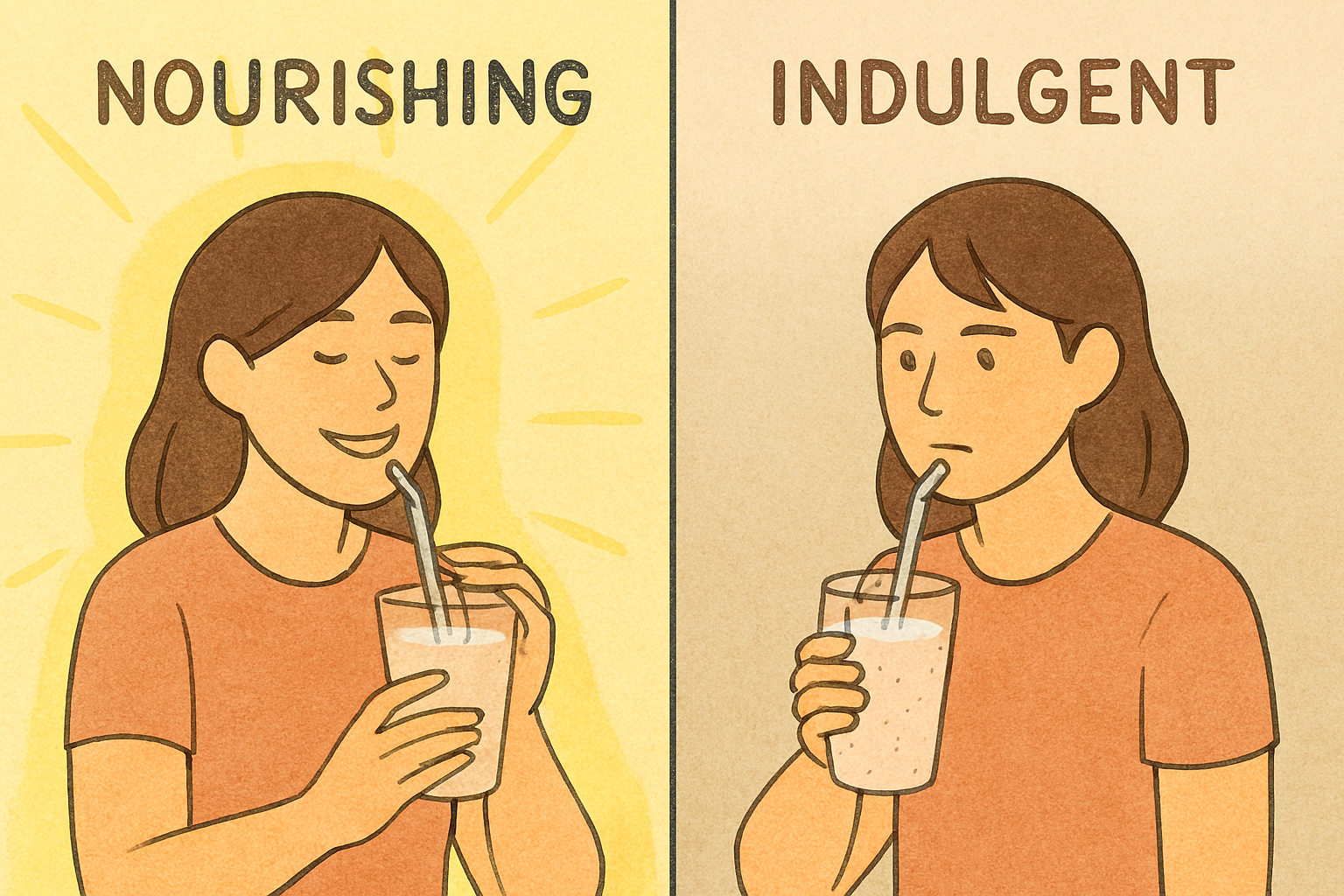
Participants were given identical milkshakes but told different stories about them: one was “indulgent,” the other “nourishing.” Same ingredients, same calories — but the group who believed they were consuming a nourishing shake demonstrated better hormonal and metabolic responses.
Belief changed the biology
.
2. The Housekeeper Study
Hotel maids were told that their daily work — lifting, walking, cleaning — counted as exercise. A few weeks later, their biomarkers improved: weight, blood pressure, waist-to-hip ratio, and more.
Their physiology shifted because their belief about their own movement shifted.
3. The Sham Knee Surgery
In a remarkable study, people with chronic knee issues underwent either real arthroscopic surgery or a placebo procedure where only skin incisions were made. Those who believed they’d had “the surgery that fixed their knee” improved just as much as the real-surgery group — sometimes more.
Their belief resolved the conflict, not the surgical intervention.
Now we reach the deeper layer — the lens of German New Medicine (GNM).
German New Medicine & the Self-Devaluation Conflict
In GNM, chronic pain or degeneration in joints often reflects a self-devaluation conflict:
“I’m weak.”
“I’m incapable.”
“There’s something wrong with me.”
“I can’t do what others can.”
The knee, specifically, relates to flexibility, movement, ability, and self-worth in action. When someone holds a long-standing belief that their knee is damaged or incapable, the body continuously mirrors this internal conflict.
The sham surgery dissolved the conflict not because anything was physically fixed, but because the person finally believed:
“My knee is better now.”
“I can climb stairs again.”
“Someone fixed what was wrong with me.”
They experienced a shift in identity and expectation, which in turn allowed the biology of the knee to shift.
Linking It All Together: Energy, Attention, Belief
Whether it’s food-shaming at a shared table or internal monologues about being “out of shape,” “lazy,” “injured,” or “broken,” the focus of your attention becomes the instruction set your body follows.
-
If you believe a dessert is “bad,” your body will respond as though you’ve consumed something harmful.
-
If you believe your daily movement counts as exercise, it will.
-
If you believe your body can heal, it opens pathways for healing.
-
If you believe something is nourishing, your physiology aligns with that belief.
-
If you believe you are broken, incapable, or damaged, your biology manifests that belief.
The mind is not separate from the body; belief is not separate from biology. Your attention is an active ingredient. Your words are instructions. Your expectations are biochemical signals. Your subconscious narratives shape your tissue-level responses.
The Takeaway
Shape your inner dialogue consciously.
Speak kindly around food.
Eat with gratitude, not guilt.
Recognize the power of belief — not as superstition, but as a biological force.
Shift how you relate to your body, and your body will shift in response.
Where your attention goes, your energy flows — and your physiology follows
.
Originally published on Substack — view source