July 3, 2025
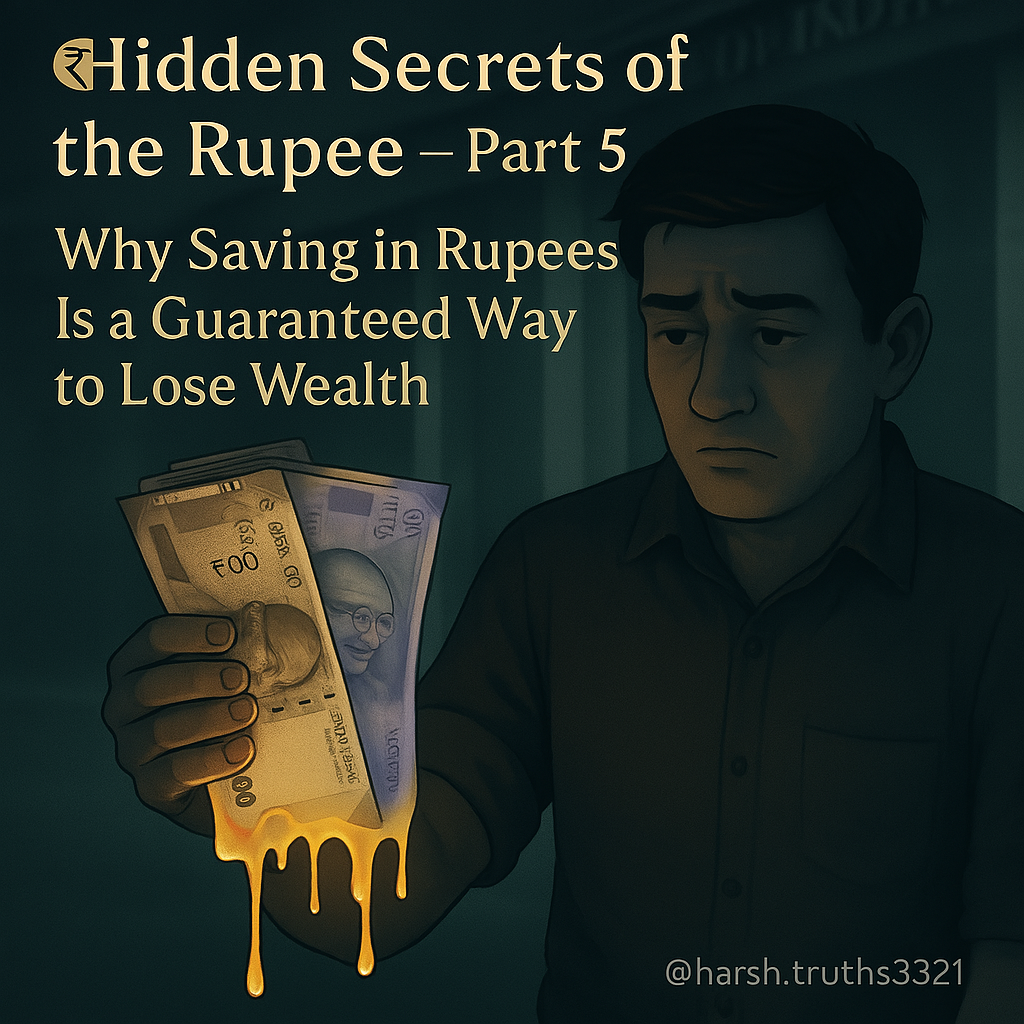
💰 Hidden Secrets of the Rupee — Part 5
Why Saving in Rupees Is a Guaranteed Way to Lose Wealth
In Part 4, we exposed the UPI trap — how convenience is being weaponized to centralize control over your money.
Now we confront the next illusion:
That “saving money” in rupees — or in the bank — is actually helping you build wealth.
The reality?
It’s the surest way to lose it.
Let’s break down how.
🏦 “Safe” Savings Are a Lie
We’re taught from childhood:
-
Save in a savings account
-
Earn “interest” over time
-
Let your money grow safely in a bank
But this advice is dangerously outdated — and deliberately misleading.
Here’s why:
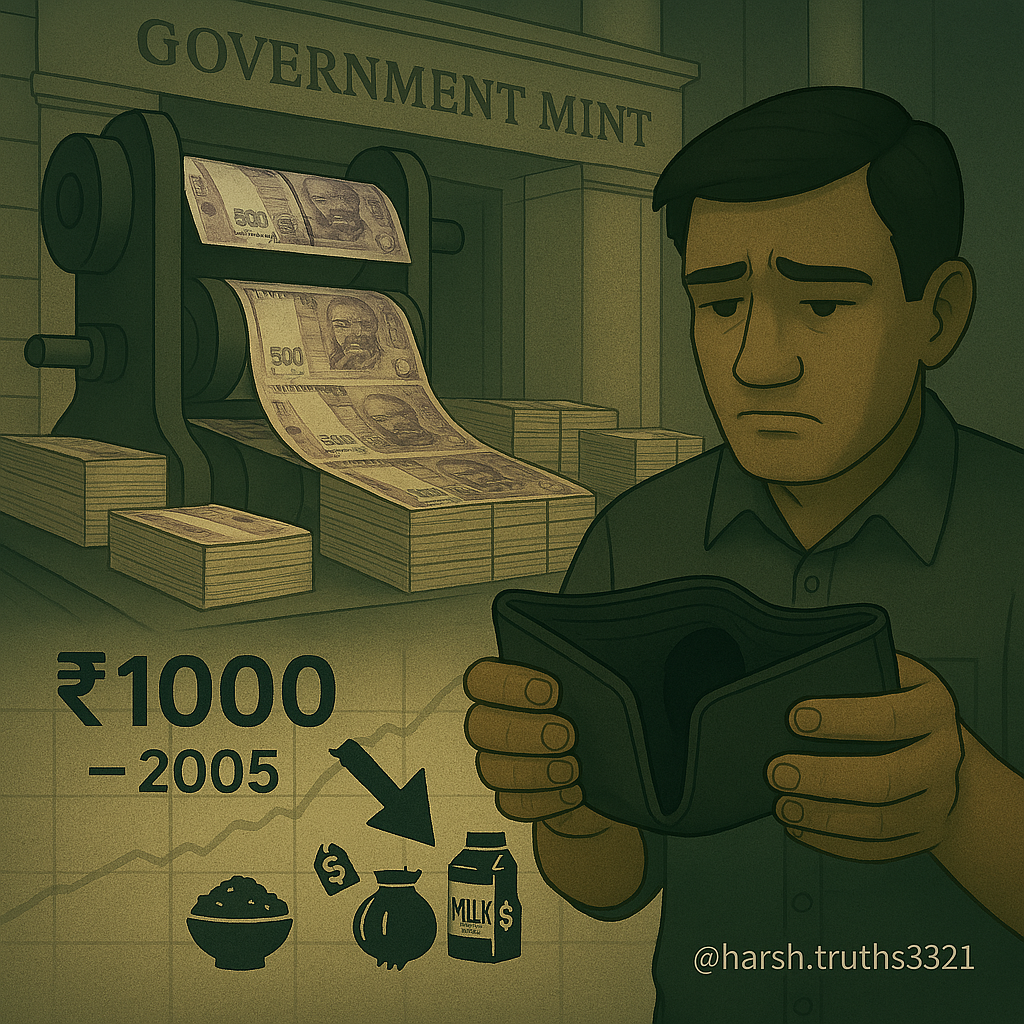
📉 The Rupee is Always Losing Value
Inflation in India officially averages 5–6% per year.
That means:
-
₹1,00,000 today = ₹94,000 in purchasing power next year
-
Over 10 years, you’ve lost half your value in real terms
Now look at your savings account. Most offer 2–4% interest annually.
You’re not gaining — you’re losing.
This is theft by stealth
.
Why Inflation Steals from the Poor
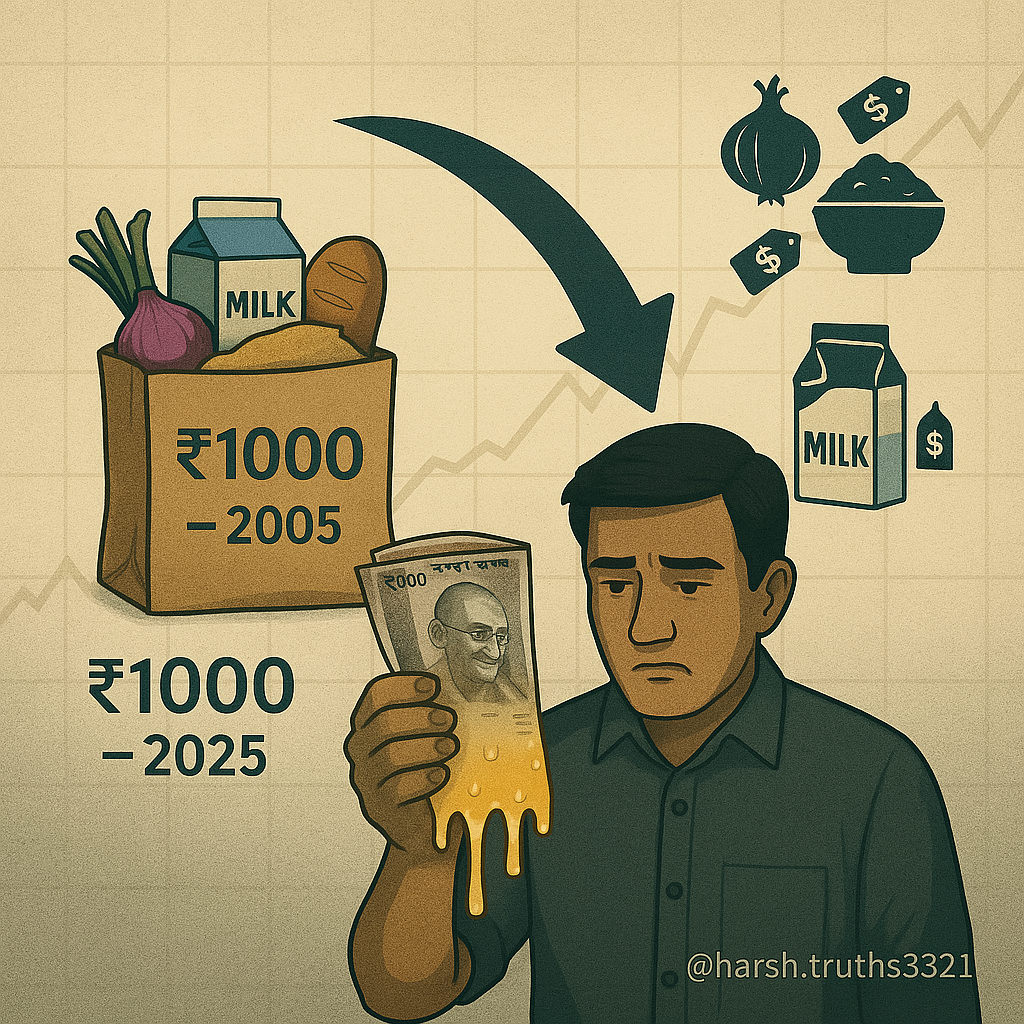
Inflation is called a “hidden tax” for a reason:
-
It’s not voted on
-
It doesn’t show up on your paycheck
-
But it erodes your wealth every second
And the people hit hardest?
-
Savers
-
Fixed income earners
-
The middle class trying to “do the right thing”
Meanwhile, those closest to the money printer — governments, banks, large corporations — benefit from freshly created currency before prices rise.
This is called the Cantillon Effect.
It’s not a bug. It’s the system working as designed.
🏚️ The Real Risk Isn’t Spending — It’s Saving
If you keep your money:
-
In a savings account
-
As cash under the mattress
-
In FDs or low-yield instruments
You’re bleeding purchasing power daily.
You might feel “safe” seeing a balance of ₹1,00,000 in your account —
But that amount will buy you less and less every year.
“If you don’t find a way to make your money work while you sleep, you will work until you die.” — Warren Buffett
🔑 The Answer: Sound Money
Throughout history, civilizations have always returned to one principle:
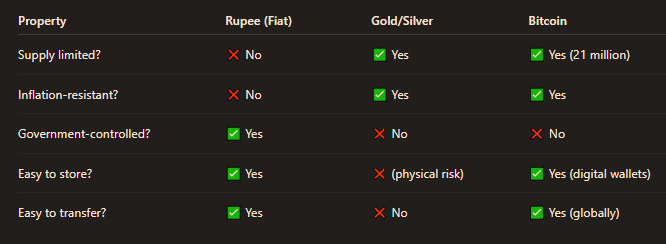
Money must be hard to create — or it becomes worthless.
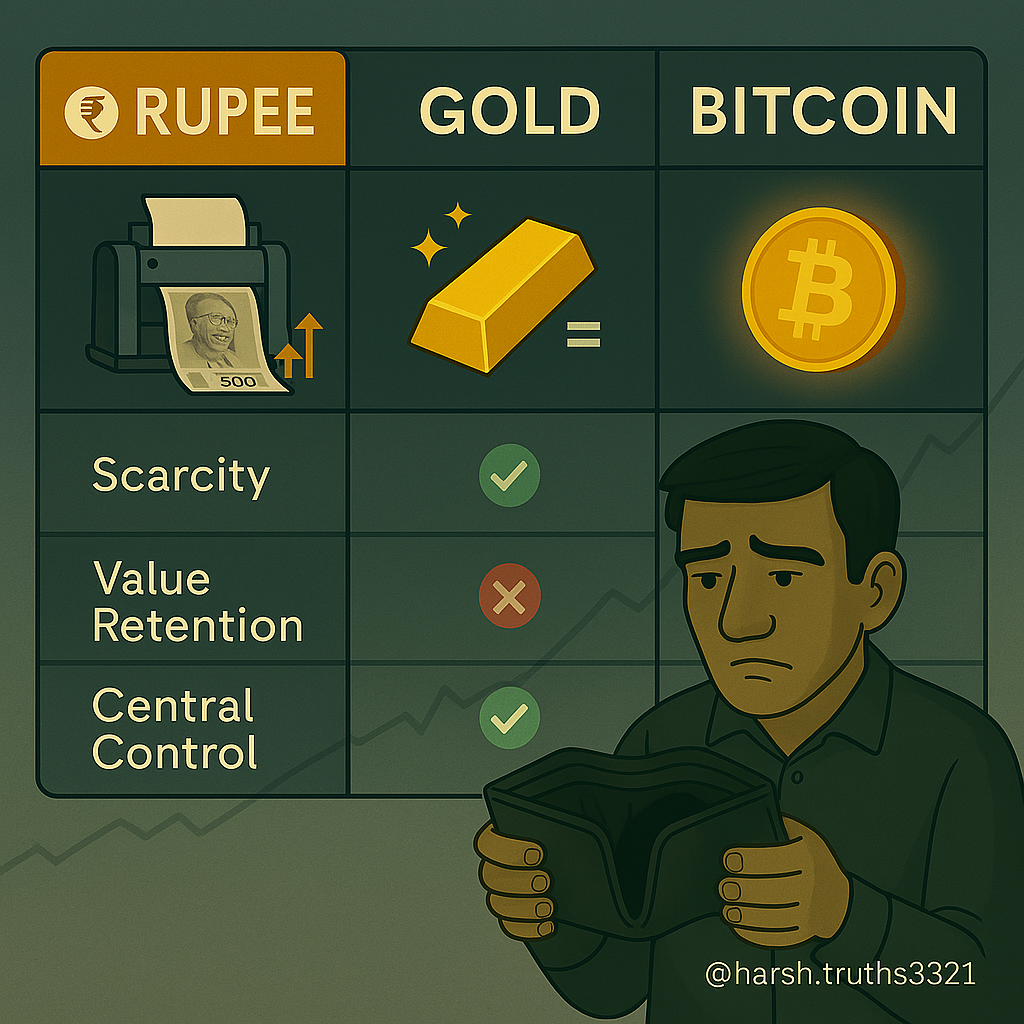
Let’s compare:
💡 Why Bitcoin is Crucial
Bitcoin isn’t just an “investment.” It’s a monetary revolution.
-
It’s the hardest money ever created
-
Its supply is capped at 21 million — forever
-
No one, not even governments, can change the rules
-
It can’t be inflated, censored, or seized (if self-custodied)
If the rupee is leaking value daily,
Bitcoin is a lifeboat.
But What About Gold?
Gold is a proven store of value across 5,000+ years.
It:
-
Holds its purchasing power over time
-
Can’t be printed
-
Is universally accepted
But it has drawbacks:
-
Physical risk (theft, storage)
-
Hard to divide or transfer
-
Subject to import duties and regulation
That’s why many opt to hold both:
Gold for stability. Bitcoin for portability and growth.
🚨 Why You Must Exit the Rupee
Let’s be clear:
We’re not saying abandon rupees entirely.
You need it for daily life — bills, food, rent, business.
But saving in rupees?
That’s wealth suicide.
Start reallocating:
-
Emergency fund: maybe 3–6 months in rupees
-
Everything else: Gold, Silver, Bitcoin (in self-custody)
This is not just wealth protection. It’s wealth preservation
.
🧠 Final Thoughts
“You can ignore reality, but you can’t ignore the consequences of ignoring reality.” — Ayn Rand
If you save in a melting ice cube (rupee),
You’ll be left with cold hands and empty pockets.
If you switch to scarce, sound money —
You give yourself a fighting chance.
You reclaim sovereignty over your time, energy, and future
.
🔔 Coming Up in Part 6:
-
Why governments want a cashless society
-
The dangerous reality of CBDCs (Central Bank Digital Currencies)
-
How your digital payments can be used to punish, restrict, or silence
-
And how to prepare for a future without financial freedom
-
How the Indian payment revolution may be paving the road to financial slavery — one scan at a time.
-
Learn more about Indian Bank Collapses here.
-
Read more about Fractional Reserve Banking here.
Originally published on Substack — view source