November 19, 2024
Louis Pasteur's Rabies Fraud
Everything you need to know about Rabies - Part 2
In part 1 of the Rabies series, we saw the psychosomatic effects of the disease. The portrayal of angry diseased animals heightened people’s fear of anything wild and undomesticated and created in their minds the living walking embodiment of an invisible “virus” coming to infect the defenseless with a slobbery bite. The fear of acquiring the deadly disease was the perfect tool used by Louis Pasteur in the late 1800s to ensnare people into the emerging germ theory narrative.
All it took was one bite for the sneaky “virus” to find its way into the bloodstream, attacking the brain and causing a painful death. It seems, at first glance, to be an open and shut case. However, what you will find upon researching rabies is that the presented model of the rabid animal bite transferring an infectious “virus,” which in turn causes disease, is not an accurate portrayal whatsoever and was merely a frightening myth used to propagate the delusions of a madman looking to acquire fame, fortune, and prestige.
A few months ago while researching Rabies, I looked at the unethical and fraudulent practices Louis Pasteur employed in the 1880’s in his attempt to prove a rabies pathogen exists and causes disease to sell his vaccines. Pasteur openly admitted to not being able to isolate any microorganism said to cause rabies but developed his vaccine against the invisible pathogen anyway.
This is admitted as well by the Institut Pasteur
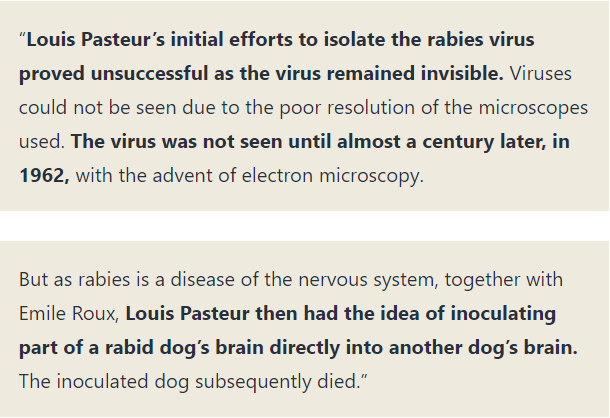
Source: https://www.pasteur.fr/en/institut-pasteur/history/troisieme-epoque-1877-1887
Pasteur never worked with any purified and isolated “virus” and did what virologists still do today, which is to assume an invisible entity is floating freely in the unpurified solutions of diseased animals which are then inoculated into healthy animals in attempts to cause disease and prove pathogenicity. Interestingly, Pasteur would fail many times in his attempts to infect animals with saliva from animals claimed to be rabid, the very fluids the “virus” is supposed to reside in.
I have provided the most relevant highlights from this paper but I do recommend reading the whole thing sometime as there are passages from Pasteur’s own papers and other interesting facts contained within.
Even if deemed successful, the symptoms would not appear for months, which was unheard of for any pathogen. Thus, he sought other means of infecting animals by way of injecting dogs directly in the brain with the emulsified cranial goo from animals claimed to be rabid. Once the healthy animal died from the toxic brain injection, this was considered a success.
Pasteur’s ‘work’ on rabies:
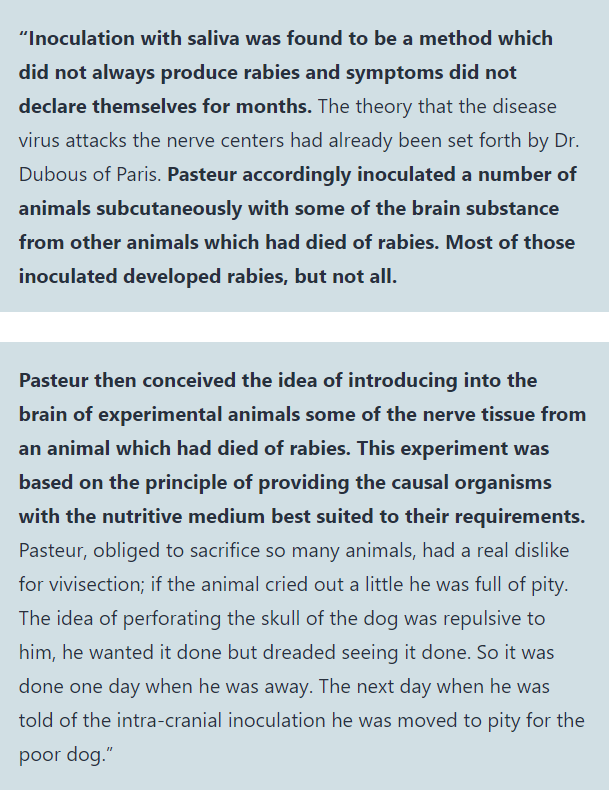
Source: https://doi.org/10.2307/3410286
While the exact make-up of the inoculations remain a mystery due to Pasteur’s secretive nature, the vaccines he utilized contained a neurotropic agent which was known to cause the EXACT same neurological conditions as seen in rabid animals. While injecting anything into the brain would potentially cause neurological damage and death, it is not far-fetched to believe Pasteur used the same neurotropic agents in his experimental inoculations to prove pathogenicity, especially as they were said to consist of emulsified brain and nervous tissue. This created an issue in determining whether it was the invisible “virus” or the injections themselves that caused neurological damage and/or death.
However, it has been admitted that the vaccines themselves led to the majority of neurological conditions rather than “wild” rabies cases as this was considered a rare occurrence in nature. This is just another in a long history of cases where the vaccine created the disease it was supposed to be preventing.
Fortunately, we can learn a lot of interesting tidbits about rabies (or the lack thereof) from the work of Gerald Geison, a leading Louis Pasteur researcher and historian who was privy to his private notebooks. In a 1978 essay he wrote on the ethics of rabies vaccination, Geison pointed out some of the peculiarities of rabies such as the fact that it has always been considered a rare disease in man as well as the fact that rabies can not be transmitted from person-to-person.
This is confirmed by WHO today:
“Human-to-human transmission through bites or saliva is theoretically possible but has never been confirmed.”
Source: https://www.who.int/news-room/fact-sheets/detail/rabies
He also noted that, as a pathogenic disease, rabies has an unusually long incubation period. While it is said to usually last 6 to 8 weeks, Geison claimed that it can actually last for a year or more. In fact, there have been reported cases with a rabies incubation period from 6 years all the way on up to 25 years.
If that wasn’t outlandish enough to make one question the validity of what we are told of the disease, Geison stated that there was a high degree of uncertainty regarding the correlation between animal bites and rabies symptoms as well as the threat of death from being bitten by a clearly rabid animal.
Pasteur’s Work on Rabies: Reexamining the Ethical Issues
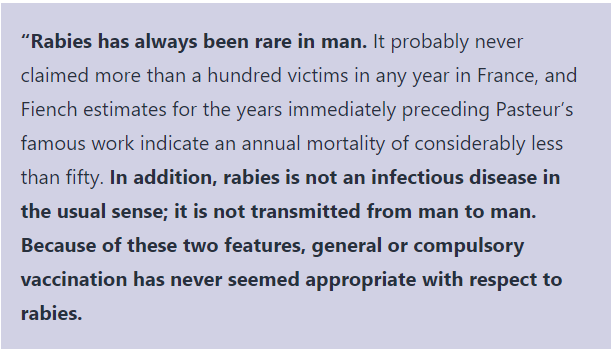
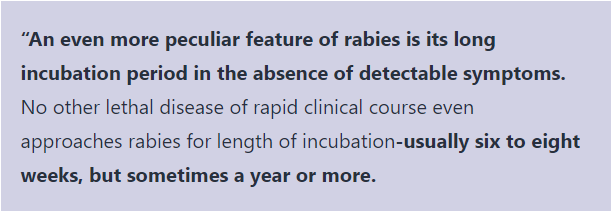
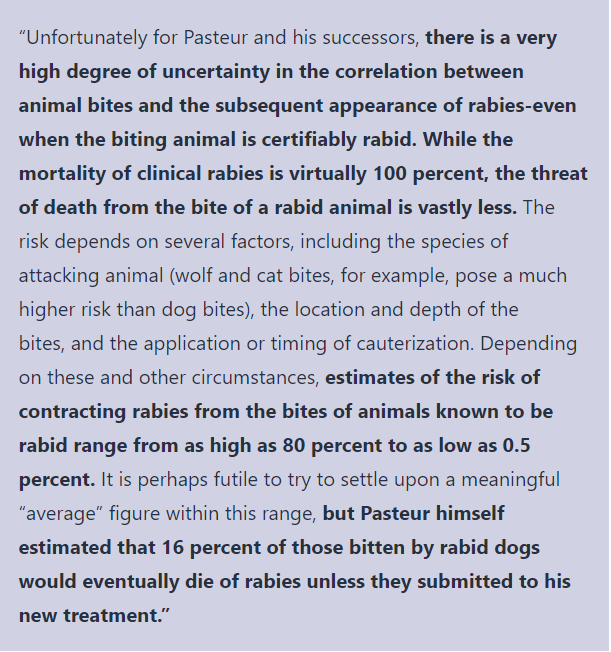
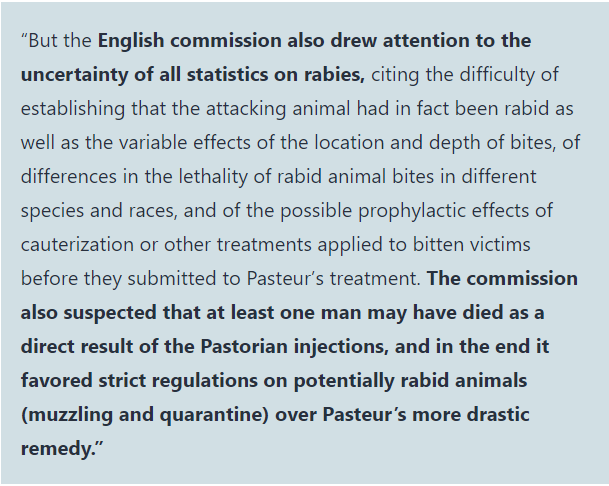
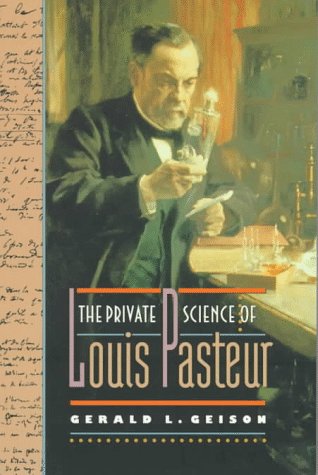
In his 1995 book The Private Science of Louis Pasteur, Geison pointed out that, according to the English Commission on Rabies, there was also much uncertainty in the rabies statistics. They had suspected that at least one man had died not from rabies but from Pasteur’s vaccine instead and they actually favored animal regulations over Pasteur’s vaccination approach:
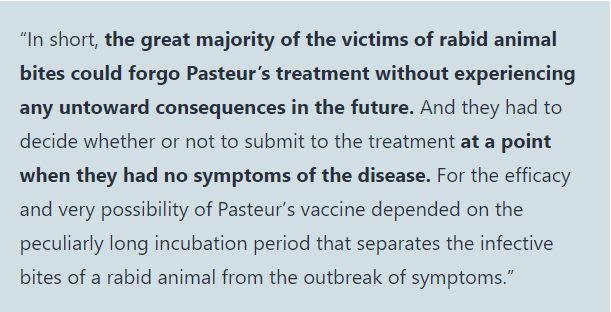
We also find out from Geison that, in great contrast to what we are told about rabies, the great majority of rabies victims could forgo any treatment and never have any ill effects whatsoever:
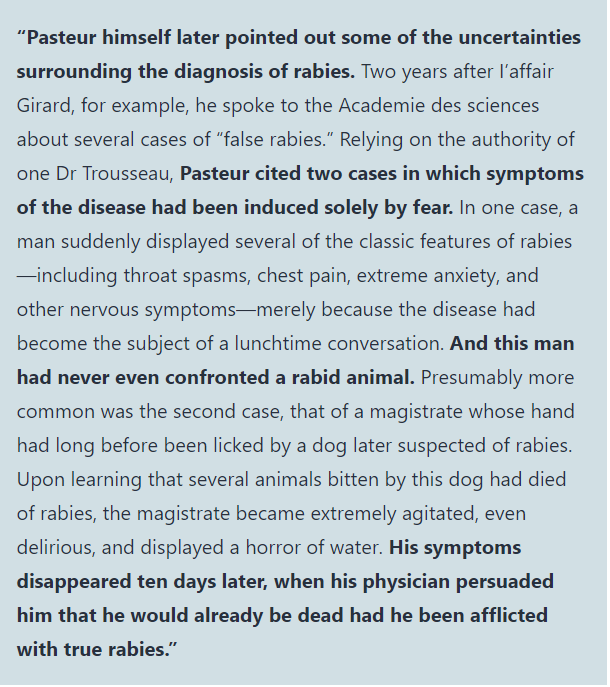
Geison even highlighted what was known as “false rabies,” which were cases of the exact same symptoms of disease associated with rabies that occured despite a complete lack of the victim being bitten by a rabid animal. These symptoms were said to be either induced solely based on fear alone or by alcoholism. In other words, just the mere thought of rabies could create an intense enough reaction inducing the same disease, thus no invisible microscopic pathogen is necessary.
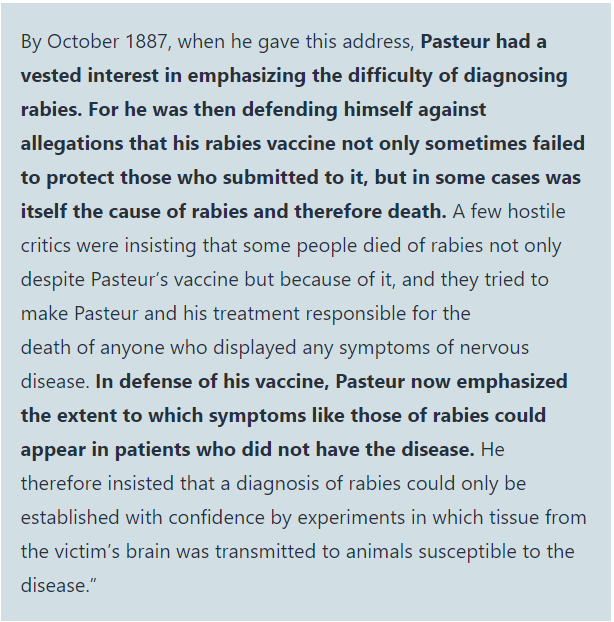
Pasteur actually emphasized these cases in defense of his vaccine as there was a growing chorus of criticism that his vaccine did not protect the victims and in fact induced the symptoms of rabies which lead to their deaths. Pasteur therefore had a vested interest in showing that these same symptoms could occur outside of animal bites and vaccination:
In this same address, Pasteur commented upon a recently published case history of “false rabies.” Partly because it includes an arresting account of the classic symptoms of rabies, his commentary deserves quoting at length. As recorded in the Comptes rendus of the Academie des sciences for 17 October 1887, Pasteur spoke as follows:
The patient to whom Mesnet refers in his brochure was an alcoholic who, having seen some sort of deposit in his glass during lunch, was seized by a feeling of horror toward the liquid and by a constriction of the throat, followed by headache and by lameness and fatigue in all his limbs. He spent Sunday in this state.
During that night and during the day on Monday and Tuesday, no sleep, a fit of suffocation, throat spasms, and a horror of liquids, which he pushed aside in his glass. His countenance expressed disquiet. His eyes were fixed, glazed, the pupils greatly dilated. His speech was brief, jerky, rapid. He had difficulty breathing. When he was offered a glass of water, he pushed it aside with terror, and suffered fits of suffocation and of constriction of the throat. Bright objects and light were particularly disagreeable to him. He was painfully affected when the air was agitated in front of his face. He died Wednesday night after having suffered from a violent delirium, with extreme agitation, howls and cries, extremely abundant salivation, spitting, biting his bedsheets, and trying also to bite the person taking care of him. In short, this man displayed all the features of furious rabies [I’hydrophobie funeuse]. But he did not die of rabies. He had never been bitten and on several occasions, at long intervals, had already displayed symptoms analogous to false rabies. This man was an alcoholic and belonged, moreover, to a family in which one member had died of insanity [alienation mentale].
Source: https://www.jstor.org/stable/j.ctt7zv2b1
Recommended reading/listening/watching:
https://drsambailey.com/resources/videos/viruses-unplugged/what-about-rabies/
https://viroliegy.com/2022/08/08/rabies-the-virus-of-fear/
https://viroliegy.com/2022/02/25/louis-pasteurs-unethical-rabies-fraud/
Read about the psychosomatic effects of rabies in Part 1 here:
In the next article, we’ll explore all the diseases and illnesses rabies can be mistaken for + uncover the fraud of Pasteur.
If you like my content, consider following me on threads:
https://www.threads.net/@harsh_truths3321/post/DEjqJ8JScs6
Originally published on Substack — view source