July 14, 2025
Rabies, Pasteur, and the Rabies Vaccine: A New Perspective
Part III - Historical misconceptions of rabies through the lens of physician Millicent Morden
Many of us have forgotten that rabies was once viewed through the lens of superstition—a remnant from an era when disease was believed to be transmitted by supernatural forces moving between animals and humans.
Louis Pasteur, who had previously suffered a cerebral hemorrhage, transformed this ancient superstition into a profitable medical enterprise

Today, rabies research and treatment have become valuable assets for organizations operating globally in animal experimentation. Yet, if animal testing has conclusively demonstrated anything, it’s the improbability of humans contracting a genuine disease from dogs. Pet owners are waking up, and it is getting difficult for financial interests who are preventing facts from reaching the masses.
Thanks for reading Harsh’s Substack! Subscribe for free to receive new posts and support my work.
Evolution of rabies “treatments”
Historical records preserved in archives document various purported cures throughout history:
-
A monarch’s kiss was once believed to cure rabies
-
Later, a piece of the king’s clothing was thought to be equally effective
-
The “mad stone,” when placed on the bite wound, supposedly extracted the “madness”
-
Using hair from the offending dog—either ingested or applied to the wound
-
Extract of “wild cockroach” gained popularity in later periods
In 1806, Mr. Kraus received a $1,000 award from New York territorial authorities for his “scientific discovery” claimed to have kept rabies at bay for over two decades. His documented formula consisted of ground jawbone from a donkey or dog, a piece of young horse’s tongue, and verdigris from a penny minted during George I’s reign.
This approach apparently kept rabies out of public concern until Pasteur’s era.
Questioning Pasteur’s Legacy
Medical literature frequently references Pasteur’s remarkable cure of Joseph Meister. What receives less attention is that three of Meister’s relatives were allegedly bitten by the same dog and fully recovered without Pasteur’s treatment.
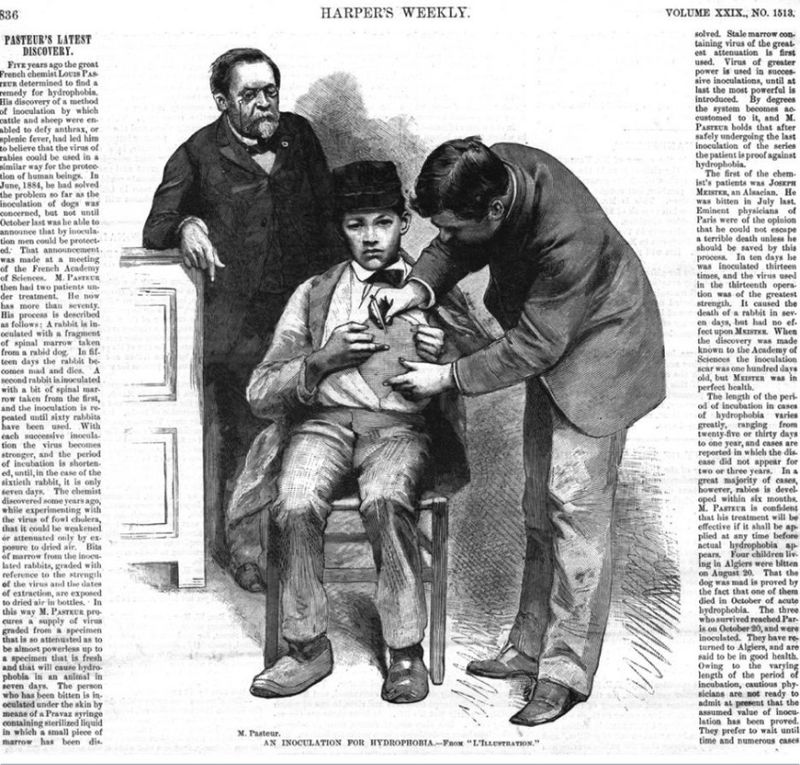
Louis Pasteur oversees the administration of the rabies vaccine. Cover of L’Illustration magazine, 1885.

**Scientific Opposition to Pasteur
**Several prominent scientists challenged Louis Pasteur’s research and conclusions. Dr. H. Bastian strongly disputed Pasteur’s scientific methodology and findings. Dr. Antoine Béchamp, another contemporary researcher, vehemently objected to Pasteur’s rabies reports and claimed priority for discovering the cause of silkworm disease and making key discoveries about fermentation. The records of the French Academy of Science support Béchamp’s claims to these discoveries.
**International Scientific Skepticism
**Dr. W.R. Hadwen from England also engaged in scientific debates with Pasteur. In the United States, Dr. William A. Bruette, who served as assistant chief of the Bureau of Animal Industry in Washington, provided multiple arguments contradicting Pasteur’s findings. Dr. Bruette went further, asserting that rabies vaccines were not only ineffective but potentially harmful, claiming that “inoculation spreads disease” and characterizing rabies vaccine sales as fraudulent.
**Contradictory Evidence from Medical Facilities
**Dr. Matthew Woods, a leading member of the Philadelphia Medical Society, documented that the Philadelphia dog pound handled approximately 6,000 stray dogs annually, with staff frequently sustaining bites, yet not a single case of hydrophobia (rabies) occurred throughout its 25-year history, during which roughly 150,000 dogs were processed.
Similarly compelling statistics came from London hospitals. Records from one London Hospital showed 2,668 people bitten by aggressive dogs with no subsequent hydrophobia cases. St. George’s Hospital in London documented 4,000 patients bitten by supposedly rabid dogs, again with no resulting cases of hydrophobia.
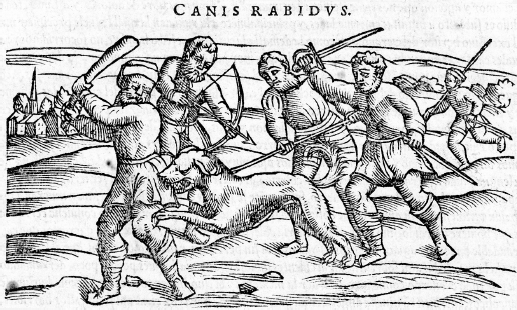
From a Spanish edition of Dioscorides’ De Materia Medica, 1566
**Medical Records Challenge Diagnosis
**Pennsylvania Hospital’s extensive 140-year disease record documented only two suspected hydrophobia cases. Notably, the single case subjected to bacteriological testing failed to confirm rabies, leading local health authorities to reject registering the death as rabies-related.
**Expert Skepticism from Leading Physicians
**Dr. Charles W. Dulles, who lectured on Medical History at the University of Pennsylvania and was appointed by state Medical Societies to investigate rabies, concluded after 16 years of research that he was “inclined to the view that there is no such specific malady” because he had “failed to find a single case on record that can be conclusively proved to have resulted from the bite of a dog or any other cause.”
This position received endorsement from several prominent medical authorities:
-
Dr. Theophilus Parvin (Jefferson Medical College and National Academy of Medicine President)
-
Dr. Thomas G. Morten (Coroner’s Physician)
-
Dr. Charles K. Mills (University of Pennsylvania)
-
Dr. Thomas I. Mays (Polyclinic Hospital)
**Alternative Explanations Proposed
**Dr. Woods later published research on mimetic diseases, suggesting that human rabies cases might result from psychological factors—specifically fear—rather than viral infection. He proposed that in animals, conditions diagnosed as rabies fundamentally stemmed from mistreatment or nutritional deficiencies.
**Several public health investigations challenged rabies diagnoses:
**Dr. Wilcox (New York) investigated eleven alleged rabies deaths, finding none actually attributable to rabies.
Dr. Elmer Lee dispelled a Staten Island rabies scare when autopsy revealed the “rabid” dog had died from heart-dwelling parasites.
A similar parasitic finding ended the Kiondike Rabies Panic
Dr. Stillman declared in 1922 that rabies was “pure humbug,” stating that in over 40 years of busy medical practice throughout Europe, he had “never seen a case of hydrophobia or rabies.” He noted a two-year rabies quarantine in New York State that resulted in many dogs being killed and tested at Cornell College’s Veterinary Department, where Negri bodies in brain tissue served as the diagnostic marker.
**Questionable Diagnostic Methods
**“I was informed by one of Pasteur’s students in France that these Negri bodies sometimes appeared in cases with no rabies suspicion whatsoever. We submitted the head of a completely healthy dog showing no disease symptoms to Cornell, which promptly classified it as rabid. Eventually, I approached the Department of Agriculture, which was in charge, and insisted that our organization would monitor all dogs declared rabid to see if any actual cases developed. Not a single rabies case emerged, and we’ve had none since. When animals were simply observed to determine if they had rabies, none died, and after two years of irrational panic and agitation—which should have produced lyssophobia or imaginary hydrophobia—the entire scare subsided.”
**Statistical Evidence Challenging Rabies Prevalence
**Dr. J.W. Hodge reported that among 56,000 stray dogs and cats collected within a single year, not one rabies case was identified. He further noted that rabies was absent in England, where Pasteur’s treatment was prohibited. Most concerning, Dr. Hodge documented the names and addresses of over 2,500 individuals reported to have died from “hydrophobia” shortly after receiving Pasteur’s preventive treatment—suggesting the treatment might be more dangerous than the disease itself, especially considering nearly 300 of these “victims” had no memory of any dog bite.
Dr. Hodge predicted that “future generations will view today’s misconceptions about hydrophobia and the Pasteur treatment with sentiments similar to those we experience when reading about the witchcraft delusion.”
**Medical Authorities Who Questioned the ‘Treatment’:
**Dr. Dulles noted: “I could reference my own experience treating individuals bitten by supposedly rabid dogs, which hasn’t produced a single case of the developed disease in thirty years. I’ve likely seen more cases of so-called hydrophobia than any other medical professional.” Dr. Dulles served as lecturer on Medical History at the University of Pennsylvania, Consulting Surgeon at Rush Hospital, and Manager of University Hospital.
Dr. William Brady, a nationally syndicated columnist, stated: “The Pasteur rabies treatment is essentially blind, and no one knows whether it provides any protection. I would never voluntarily receive Pasteur treatment or administer it under any circumstances, as I fear the injected material can have devastating effects in certain cases. It isn’t consistently effective, and occasionally leads to paralysis.” Dr. Brady maintained that rabies “doesn’t exist in humans.”
“As medical professionals, we’ve witnessed numerous errors made by well-meaning but misguided individuals and methodologies. The digitalis standardization using dogs’ hearts, for example, resulted in a 300% deviation from standard.”
A book titled “Béchamp or Pasteur” by E.D. Hume documents several compelling cases challenging Pasteur’s rabies treatment. One notable example involves Pierre Roscal, a young postal worker who encountered a supposedly rabid dog but wasn’t bitten, as the animal’s teeth didn’t penetrate his clothing. His companion, however, received several bites. Interestingly, the bitten companion refused Pasteur treatment and remained healthy, while Roscal—compelled by postal authorities to undergo treatment beginning March 9—developed severe symptoms on April 12, with pain at the injection site rather than a nonexistent bite wound. He died on April 14 of paralytic “hydrophobia,” described as “the new disease introduced by Pasteur.”
**Psychological Factors in Disease Manifestation
**Another documented case highlights the psychological component of rabies diagnosis. Two young Frenchmen were bitten by the same dog in Havre. One died within a month, while the other had departed for America, unaware of his friend’s fate. After living in the United States for fifteen years, he returned to France, learned about his companion’s death, subsequently developed symptoms himself, and died of “hydrophobia” within three weeks.
A third case involved a young spinster who reported being bitten by a dog after swimming. Her concerned parents rushed her for Pasteur treatments, after which she became severely ill and died. Following her funeral, her swimming companions revealed to her parents that she hadn’t been bitten by a dog but by a romantic partner.
Statistical Contradictions
The document contrasts over 3,000 recorded deaths at the Pasteur Institute of people bitten by dogs—all occurring after treatment—with London Hospital records showing 2,668 people bitten by aggressive dogs without a single hydrophobia case developing among those untreated by Pasteur’s method.
**Challenging Pasteur’s Scientific Legacy
**The text critically examines Pasteur’s scientific contributions, suggesting his only original work was separating L and D tartaric acids, while claiming his research on silkworm disease and bacteria was appropriated from Antoine Béchamp, Professor at Montpellier. Béchamp’s research allegedly provided solutions to longstanding problems in biology, physiology, pathology, and philosophy.
Dr. Leverson of England is quoted asserting that Béchamp’s work proves “the absurdity of the germ theory of disease,” while characterizing Pasteur as “the most astonishing of plagiarists” who distorted others’ discoveries, particularly those of Béchamp and his colleagues, calling him “the most monumental charlatan” in medical history.
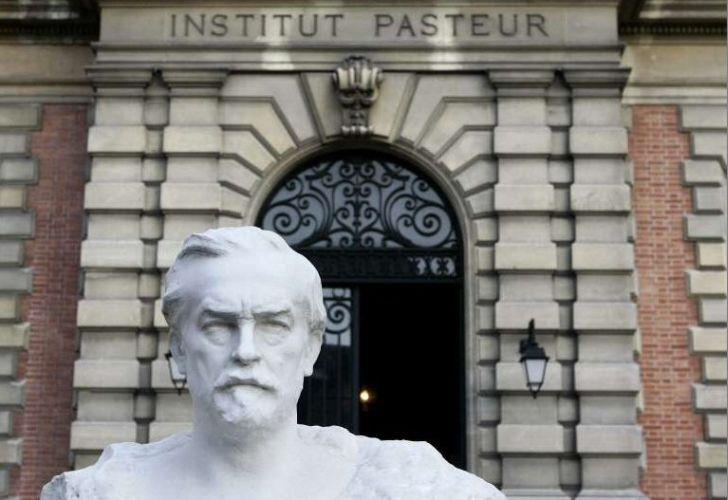
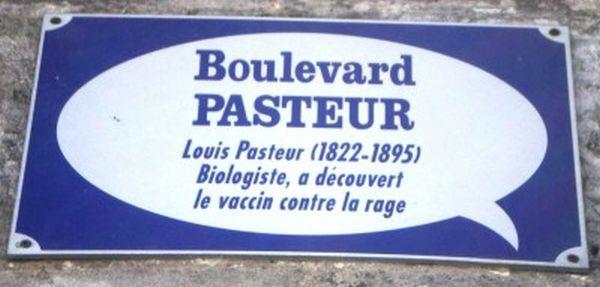
“You have likely deduced the identity of this alleged plagiarist and charlatan. It was Louis Pasteur, whose memory France has commemorated with statues throughout the country and by establishing the Pasteur Institute.”
Given this controversial portrayal, let’s examine rabies from the perspective of documented evidence. We’ve seen that healthy dogs can be misclassified as rabid based on the identification of these “Negri bodies.” We’ve also noted that the identification of these bodies depends significantly on individual interpretation, with experts rarely reaching consensus. Even specialists at the Pasteur Institute acknowledge that Negri bodies aren’t definitively indicative of rabies, while also documenting numerous deaths associated with Pasteur treatment protocols.
**Alternative Explanations for Symptoms
**Conversely, adverse effects in untreated patients (relatively few cases are documented) might be explained by psychological factors or sensitivity to minor injuries. For instance, Dr. W.W. Duke of Kansas City, among others writing about allergic responses, documented cases of severe convulsions and deaths following minimal injuries in seemingly healthy individuals. These fatalities reportedly resulted from scratches, dental extractions, injections, temperature extremes, various forms of shock, emotional distress, and other causes. Allergy experts often emphasize how previous illnesses may have compromised patient health. Such diverse triggers suggest that fear plays a significant role in the observed consequences.
**Alternative Treatment Approaches
**Dr. Buisson from France, severely bitten by a dog and expected to die from hydrophobia, described experiencing intense fear and suffering. He decided to try alleviating his symptoms with a warm bath. After soaking for seventy-five minutes, his convulsions subsided, and he recovered completely. He subsequently treated all similar cases using this method. The Buisson baths were successfully implemented throughout France for rabies cases.
In Germany, dog bite cases are pragmatically treated by applying suction to the wound or squeezing it to encourage bleeding. They allow the blood to clot and dry on the wound without further intervention, avoiding subsequent complications. Based on my experience, nothing stronger than mild soap and water should be applied to such wounds, as cauterization causes excessive tissue trauma.
Concluding Questions
-
Is rabies truly a disease?
-
Have we definitively isolated a virus or pathogen?
-
Is the Pasteur treatment specifically effective?
-
Is rabies, ultimately, fact or fiction?
“I believe it [rabies] is fiction, as I have handled allegedly rabid animals and humans without Pasteur treatment, and in no instance has there been a death or any symptoms of rabies. I propose that rabies is nonexistent and that the Pasteur treatment is more harmful than the supposed disease—which doesn’t actually exist.
P.S. I have examined and witnessed repeated examinations of every part of the brains of supposedly rabid dogs. The mouse and rabbit tests have proven unreliable since Pasteur’s time.”
MILLICENT MORDEN, MD
Physician & Surgeon
72 Norman Ave, Brooklyn 22, NY

In man’s quest to fight diseases, animals have been the scapegoat.
Judy Mikowits. @drjudyamikovits has a Ph.D in Biochemistry & Molecular Biology. In her book ‘Plague of Corruption’ she details how zoonosis can be successfully replicated only in sterile laboratory conditions, by injecting animal tissues into animals, never in real life or nature.
This article is part 3 of my series on Rabies. Make sure to read Part 1 and Part 2 here.
**Sources:
**RABIES, PASTEUR AND THE RABIES VACCINE Rabies Past Present in Scientific Review By Millicent Morden (Physician & Surgeon)
https://viroliegy.com/2022/08/08/rabies-the-virus-of-fear/
https://viroliegy.com/2022/02/25/louis-pasteurs-unethical-rabies-fraud/
Thanks for reading Harsh’s Substack! Subscribe for free to receive new posts and support my work.
Originally published on Substack — view source