July 9, 2025
The real meaning of Marriage
The physical marriages between people are an echo of a deeper esoteric truth.
Across the globe, regardless of which country, culture, political belief, or religion one belongs to, there exists a powerful and persistent societal push toward marriage. Whether conservative or progressive, Eastern or Western, religious or secular, this pressure remains a near-universal phenomenon. But few stop to question why this institution holds such cultural weight — or whether its modern form truly honors what it once represented.
The roots of marriage go far deeper than legality, tradition, or even family-building. The origin lies in an ancient esoteric concept known as the Chemical Wedding. This idea, drawn from mystical and alchemical traditions, symbolized not the union of two individuals in the physical world, but the inner alchemy of the human psyche — the union of the masculine and feminine energies within each of us.
Thanks for reading Harsh’s Substack! Subscribe for free to receive new posts and support my work.
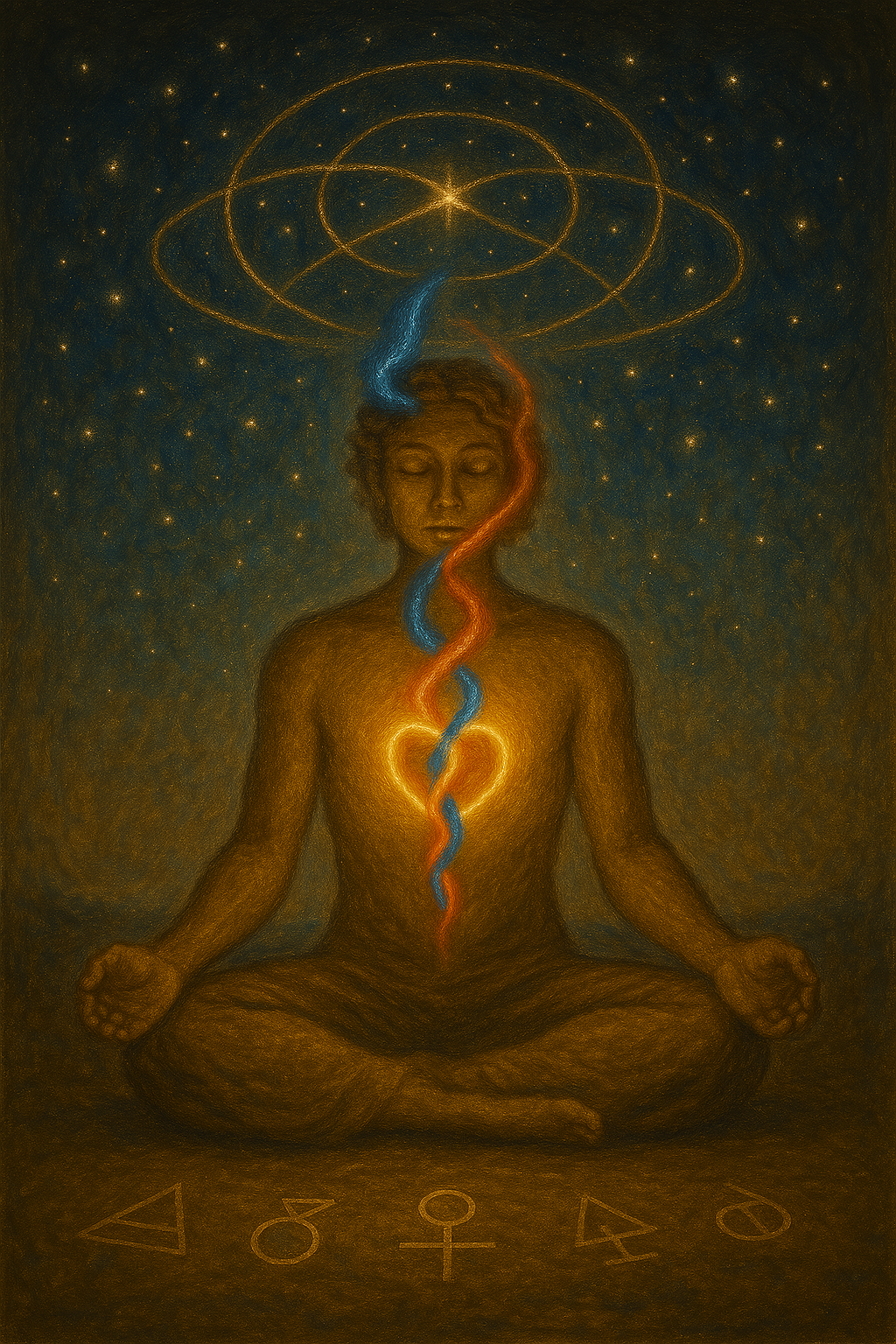
This distinction is critical: masculine and feminine do not refer to male and female. Every human being, regardless of gender, possesses both masculine and feminine aspects. In esoteric and spiritual traditions around the world, the path to wholeness has always been about reconciling and balancing these inner forces. The masculine often symbolizes logic, structure, action; the feminine, intuition, receptivity, emotion. True human wisdom and conscious evolution come from harmonizing these polarities — not by suppressing one, but by integrating both.
Ancient cultures, rooted in the principle of “as above, so below,” designed rituals that mirrored the cosmic and natural forces around them. Celestial movements, seasonal rhythms, and elemental cycles found expression in ceremonial life. Weddings, in this framework, were symbolic reenactments — outer reflections of an inner transformation. The “marriage” was never just about two bodies or legal contracts; it was a sacred act that echoed the spiritual journey of inner unification.
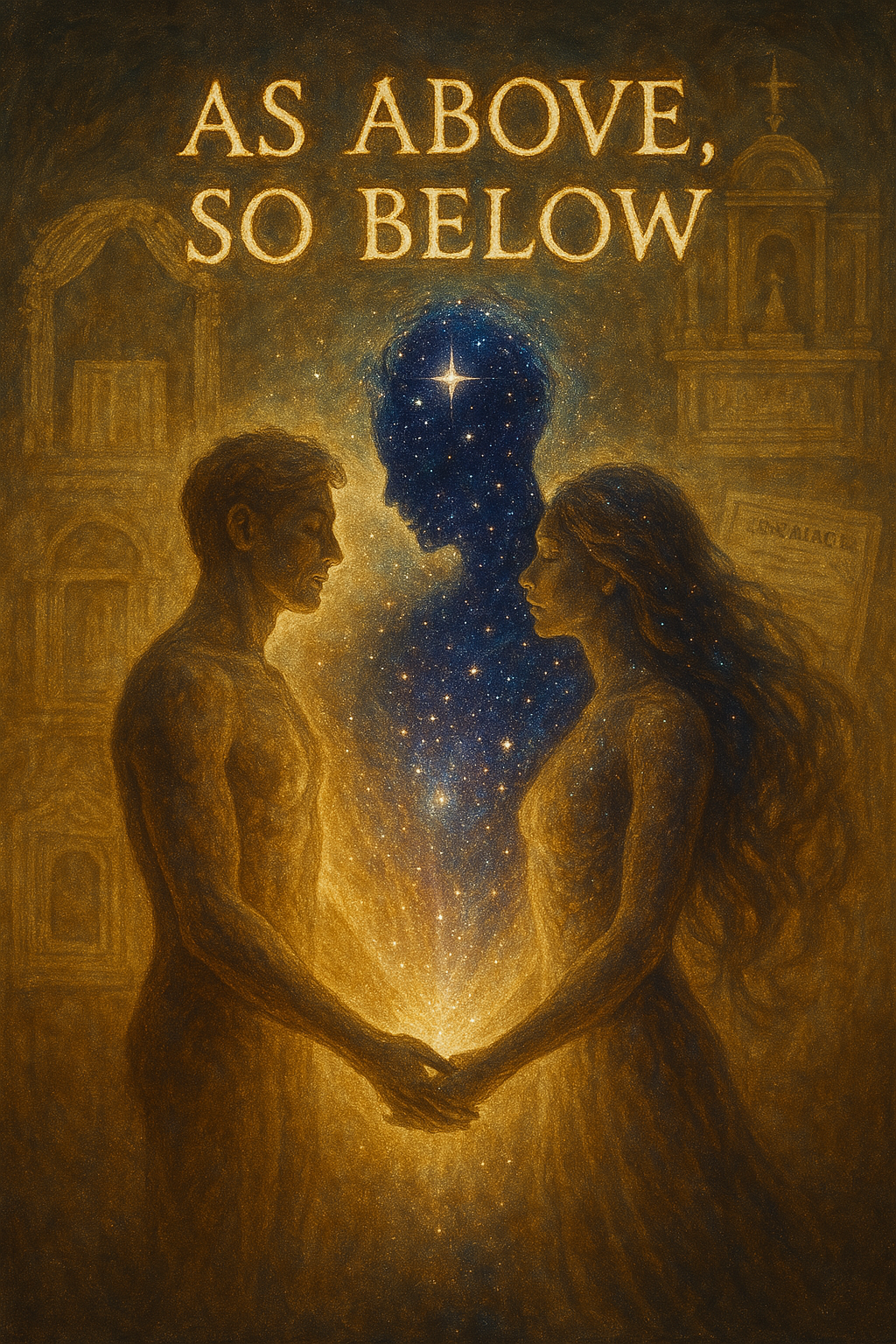
Modern marriages, however, have drifted far from this origin. In many cases, they serve as social milestones, legal arrangements, or religious obligations — often driven by cultural expectations rather than conscious choice. For those who do not wish to have children, the argument for marriage becomes even more tenuous. The old adage reminds us: “It takes a tribe to raise a child.”
If the tribe is broken, and the intention is not to bear children, what purpose does the institution serve — beyond conforming to external pressures?
To resist these pressures, individuals must possess a strong sense of self-worth. A truly conscious relationship does not require the validation of the state or the blessing of religious authorities. Two people, connected in mutual respect and love, can build a life together without intermediaries. But many lack this confidence — and so they turn to marriage for a sense of security. Yet, what is often sold as emotional or legal insurance is, in reality, a trap.
By involving the state or religious institutions in an intimate bond, the sacredness of the relationship is diluted. When conflicts arise — as they inevitably do — these external forces step in as arbiters. The relationship, once deeply personal and spiritual, becomes bureaucratized. Instead of resolving issues through mutual growth and understanding, couples are pushed toward legal battles, moral judgments, or societal expectations.
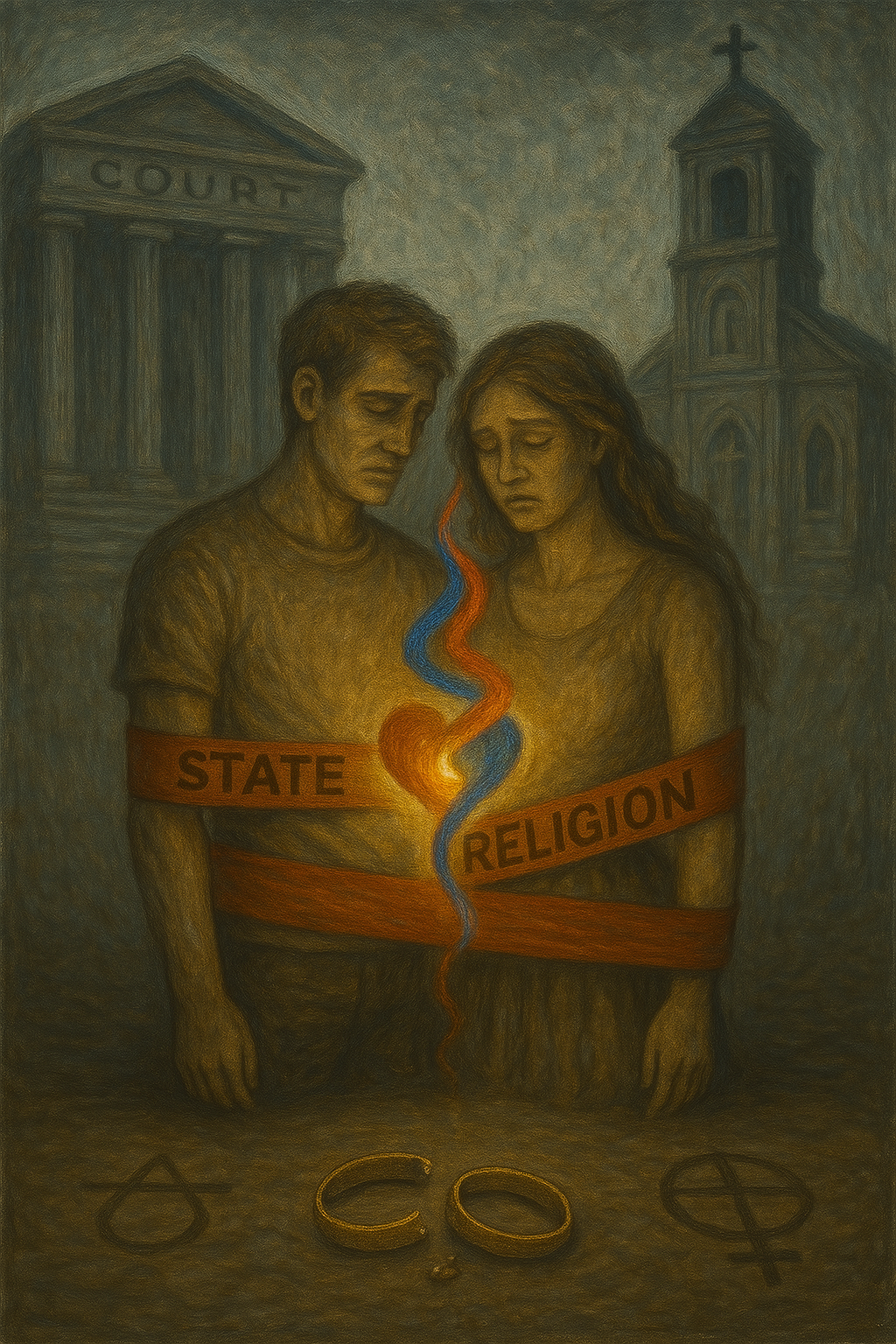
In this way, modern marriage not only fails to protect love; it often undermines it. The very act of institutionalizing a relationship introduces conditions, contracts, and constraints — all of which can stifle the organic unfolding of love and growth between two individuals. What once was a sacred symbol of inner unity has now become, for many, a cheap imitation.
The rising rates of divorce and marital dissatisfaction are not anomalies — they are symptoms of a deeper misalignment. The core issue isn’t failed communication or incompatible goals. It’s that most people enter into marriage without first achieving the inner marriage — the true chemical wedding. They seek in another person what they have not reconciled within themselves. And without that balance, no external bond can be stable.
Marriage, in its modern form, cannot solve this crisis. It can’t substitute for inner work. It can’t make up for emotional immaturity, trauma, or spiritual disconnection. Until we recognize that the highest form of union happens within, not without, we will continue to see relationships falter under the weight of misunderstood expectations.
Thanks for reading Harsh’s Substack! Subscribe for free to receive new posts and support my work.
Originally published on Substack — view source