July 27, 2025
Why Conspiracy Work is Spiritual Work
Seeking truth in a world steeped in deception is a spiritual act.
Your spiritual journey starts when you actively start seeking out the answers to life’s mysteries. But, there are spiritual dimensions to seeking truth in a world steeped in deception.
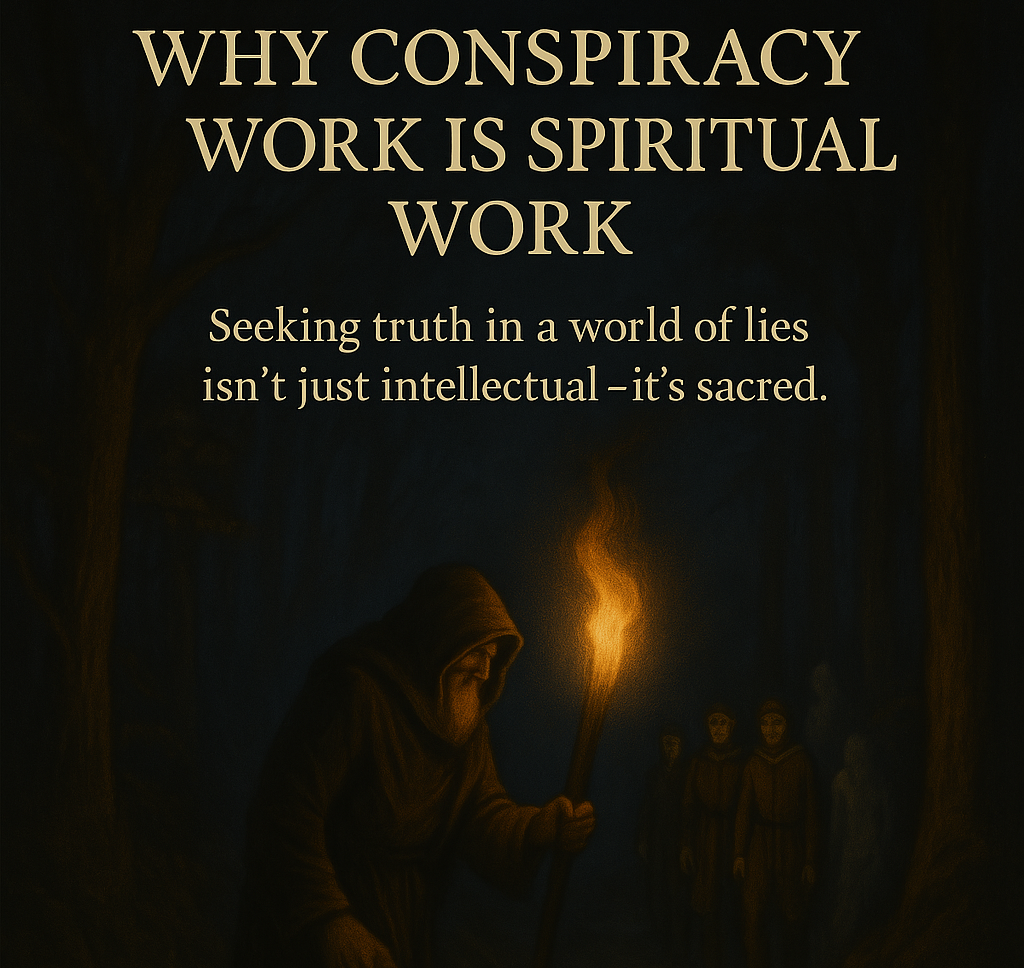
Most people, live their lives in deep conformity. They’ve inherited a false idea of what learning is—believing it to be the passive absorption of beliefs, credentials, and pre-approved narratives. By their twenties or thirties, many have stopped questioning. But those who feel the stirrings of truth—the call to deeper knowledge—find themselves confronting a radical realization: truth is not given; it must be earned.
Thanks for reading Harsh’s Substack! Subscribe for free to receive new posts and support my work.
And that process is not additive but deconstructive.
Truth-seeking, in this deeper sense, is not about acquiring facts. It’s about stripping away illusion. It is what the ancients called apophatic—a via negatives.
The path to truth begins with the elimination of falsehoods, of impossibilities. As Sherlock Holmes said: “When you have eliminated the impossible, whatever remains, however improbable, must be the truth.”
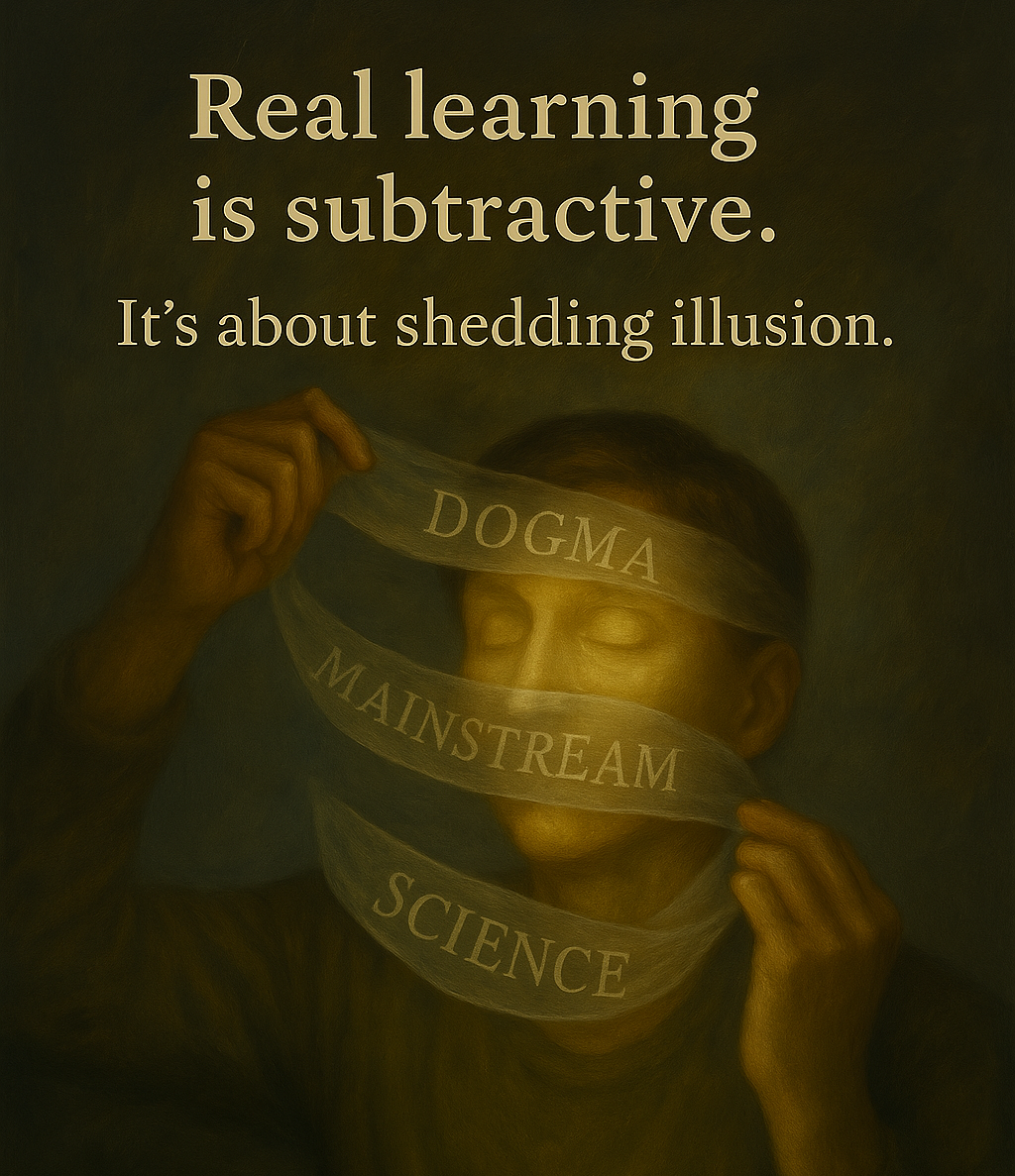
But few are trained in this art. Worse, our institutions discourage it. Education, in its current form, punishes non-conformity and rewards obedience. Independent thought is penalized with low grades and social exclusion. Critical and judgmental faculties—once marks of intelligence—are now pathologized.
Why? Because a truly thinking population cannot be easily controlled. Society demands belief, not knowledge. You are encouraged to believe in science, government, medicine—but never to know them intimately. To “go up to the canvas and smell the paint” is taboo.
So the truth-seeker must eventually recognize a painful truth: no institution will help you. At that point, the journey becomes “holy work.”
What makes it holy is not dogma or theology, but its personal sacrifice and spiritual responsibility. Once you see through the world’s illusions, the circle of responsibility contracts inward. You alone must now spend the money on the books, wrestle with difficult thoughts, and endure alienation from family, friends, and culture.
You will be misunderstood, and likely resented.
The Path of Fool
The spiritual journey—or the initiation into it—is symbolized beautifully in the zero card of the Tarot: **The Fool.
**
Being the Fool in this journey means accepting that there are many things you don’t yet know.
You’re a fool in the sense that you recognize your ignorance—especially in areas that weren’t taught to us by culture, school, parents, or peers.
So the first step in the spiritual journey is, metaphorically, to be the Fool.
Start from zero.
Accept that there are truths we’ve never personally experienced but have believed simply because others told us to.
If truth is found through personal experience,
then much of what we believe isn’t truth at all—it’s secondhand assumption.
So the spiritual journey begins with the path of the Fool:
The first step of a true seeker.
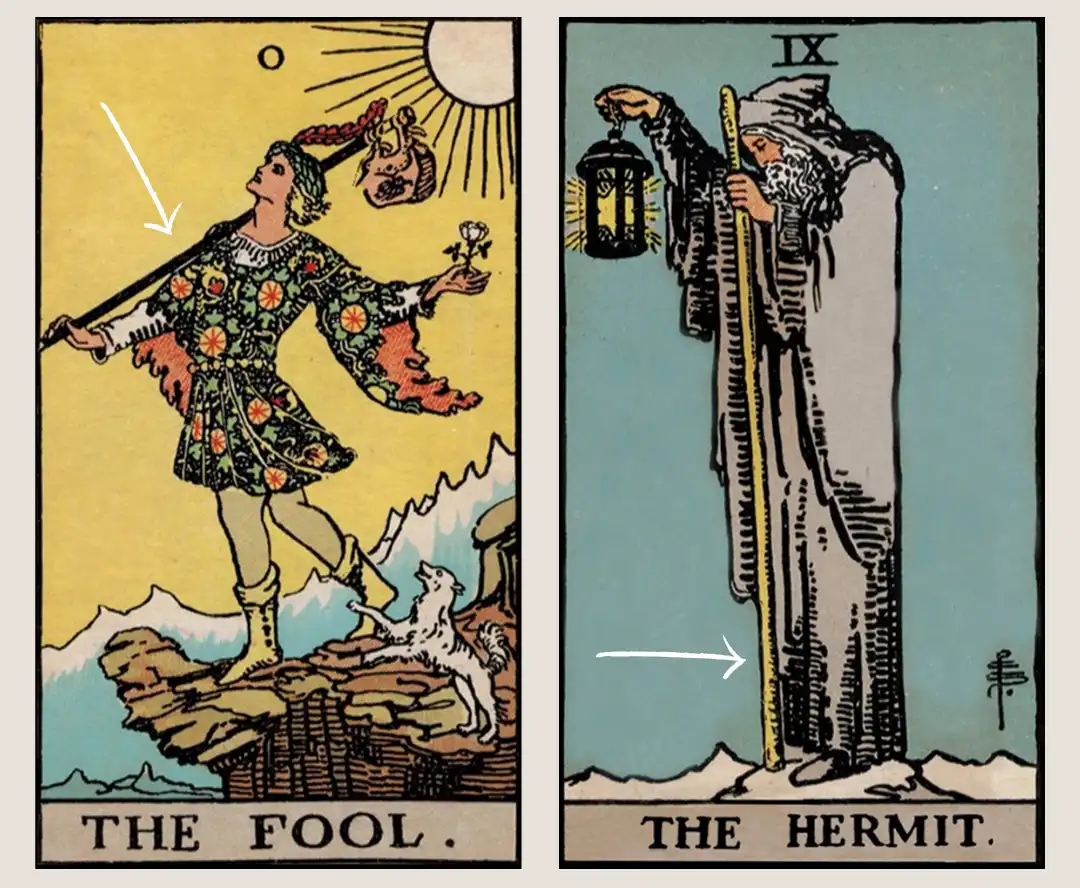
**The Sage/the hermit
**The path of the fool is taken alone. On the Tarot card, the Fool only has his bag and his dog. This very isolation during the Fool stage, transforms the journey from an intellectual pursuit into a spiritual on
You are no longer gathering ideas—you are becoming something. And that “something,” is a Sage—one who, like the Buddha, leaves the city, sits under the tree, and says, “Let me start from the beginning.”
A sage is not defined by titles or institutions but by having undertaken a self-driven, apophatic process of understanding. He learns by negation, by loss, by sacrifice, by solitude.
Many of us are on the final stage of the journey—where the road becomes deeply personalistic. In mythological terms, many have walked this path before, and their presence can still be felt in synchronicities and recurring symbols. But there comes a stage on the mountain where others cannot follow. Some can’t breathe at those altitudes. The air is too thin.
And so the final steps must be walked alone.
Yet even this solitude carries a paradoxical duty: to those who came before, and to those who will come after. On the Pilgrim’s Road, one must not only reflect on the symbolic “block in the path,” but ask: Who left this here? And why? And having navigated it, you must ask again: Should I not remove this, so others do not fall?.
This is the sacred responsibility of the sage. To challenge the gods who went before, and to clear the path for those yet to come. The work becomes a relay, a chain of spiritual inheritance and moral accountability.
In sum, truth-seeking is not simply a philosophical exercise—it is holy work. It demands courage, discernment, and a profound willingness to walk alone. It is not taught in schools. It is not praised in the media. But it is the highest calling of the human spirit.
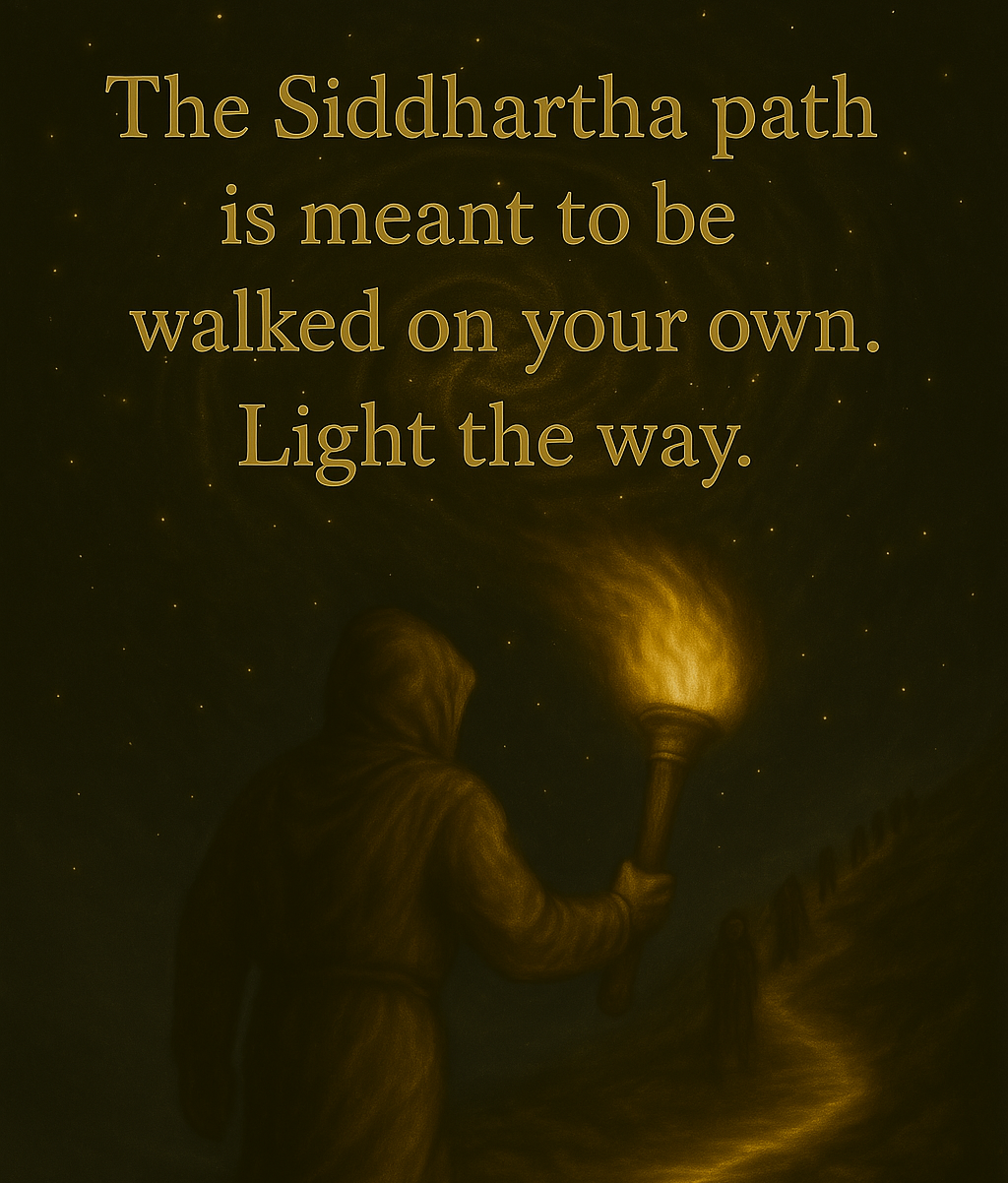
The world may be full of deception—external and internal—but those who walk the lonely path of truth do so with a torch. And with that light, they illuminate not only their own way, but the way for others.
The Siddhartha Road and the Sage’s Journey
Hermann Hesse’s Siddhartha, a modern spiritual classic captures the many archetypes a seeker embodies throughout their life—sage, lover, father, wanderer, and finally, one who sits silently beside the river, having transcended the noise of life. The early stages—the existential awakening comes when you realize that not only are institutions complicit in spiritual suffocation, but so too is the collective—the mass mind.
This insight draws from the existentialists—Kierkegaard, Nietzsche, and others—who recognized that the crowd is often the greatest enemy of truth. The individual must decompress from mass belief systems, from peers, family, priests, and the intellectual culture at large. This detoxification is not only physical or geographic (like moving to a forest); it is deeply mental. The true awakening happens internally, wherever one is—be it in a city, a suburb, or surrounded by family.
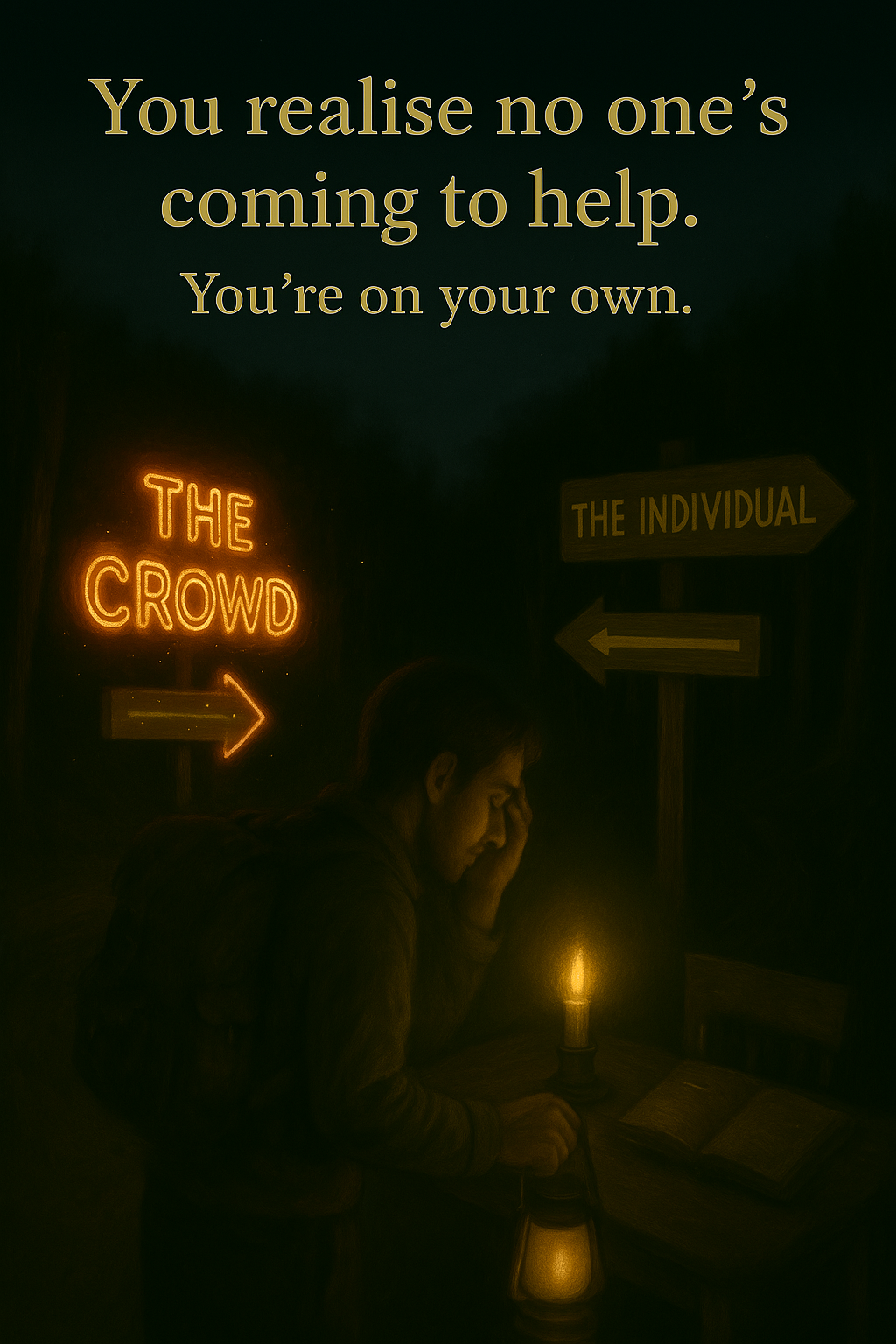
Even many books and thinkers pointing toward this awakening eventually hand you a new manual to follow. For some it is deeply personalistic—a unique journey defined not by prescriptions, but by inner resonance.
The road must be walked alone.
Once the “early pointers” have helped you orient, you must leave them behind and carve your own trail.
The Unpopular Truth: Complicity in Enslavement
A central theme is complicity. It is easy to externalize all the blame. Yes, institutions are corrupt. Yes, mass media deceives. But the individual is also a co-conspirator in their own enslavement. This idea—radical, confronting, and deeply liberating—is one that few wish to explore.
Most prefer a narrative of victimhood, which absolves them of the inner work required for liberation. True emancipation, begins when you accept your own role in your bondage.
Only then does the spiritual journey become holy work—a sacred undertaking that transcends intellectualism and becomes transformational.
Conclusion: The Sacred Duty of Inner Work
At its heart, this is a map of the inner landscape every truth-seeker must traverse. The journey begins with disillusionment—realizing that both institutions and the collective consciousness are forms of tyranny.
It progresses through deconstruction—shedding inherited beliefs, resisting conformity, and facing your own complicity.
And finally, it becomes sacred—because truth-seeking becomes no longer about knowledge, but transformation of the self.
This journey cannot be outsourced. It cannot be crowd-sourced. It must be lived. And the one who walks this path—who refuses comfort and commits to truth—is the modern sage.
As Hesse wrote, the road to truth is not paved. It is carved in solitude, walked with courage, and ultimately, leads not just to answers, but to wisdom.
caption…
Thanks for reading Harsh’s Substack! Subscribe for free to receive new posts and support my work.
Originally published on Substack — view source